
Cats are masters at hiding pain. In the wild, showing weakness could attract predators, so cats evolved to mask discomfort. For cat owners, this is a problem. By the time a cat obviously shows they’re unwell, things may already be serious. There are validated tools now to help you catch pain earlier, plus a few safety rules worth knowing before you do anything else.
Why Do Cats Hide Pain?
Cats’ ancestors were solitary predators that were also prey for larger animals. In that environment, showing weakness meant exposing yourself as an easy target. Even though domestic cats now live safely, the instinct remains.
This means cats won’t howl or whine like dogs do when in pain. Mild to moderate pain often shows no obvious behavioral changes. By the time a cat is obviously hiding, not eating, or not drinking, the situation may already need urgent attention. That’s why the subtle signs matter.
There are two flavors of pain to learn to spot, and they look different:
- Acute pain is sudden onset, often from injury, surgery, or illness. The Feline Grimace Scale below is the validated tool for this.
- Chronic pain builds slowly over months or years. Most often it’s arthritis in an older cat. The Grimace Scale was not designed for chronic pain; you need a different lens.
We’ll cover both.
Never give a cat human painkillers
Acetaminophen (Tylenol, paracetamol) can be rapidly fatal to cats because they cannot process it the way humans do. Even a single regular-strength tablet can cause life-threatening anemia and liver failure. Ibuprofen (Advil, Motrin) and naproxen (Aleve) can cause acute kidney failure and stomach bleeding at small doses. Aspirin requires precise feline dosing and is rarely used at home. If your cat seems in pain, call a vet. Do not raid the medicine cabinet. If exposure has already happened, call your vet or pet poison control immediately, even if your cat seems fine.
The Feline Grimace Scale (Acute Pain)
In 2019, researchers at the University of Montreal published the Feline Grimace Scale, a tool for assessing acute pain in cats based on facial expression. It has been validated in clinical studies, and you don’t need any training to use it. The scale scores five facial features (ears, orbital tightening around the eyes, muzzle tension, whisker position, head position) from 0 to 2 each, for a total out of 10. A score of 4 or above suggests the cat is in pain and should be seen by a vet.
Use the interactive tool below to assess your cat. Score each of the 5 facial features from 0 to 2 based on what you observe:
Pain Assessment Tool
Select a score for each feature based on your cat's current expression
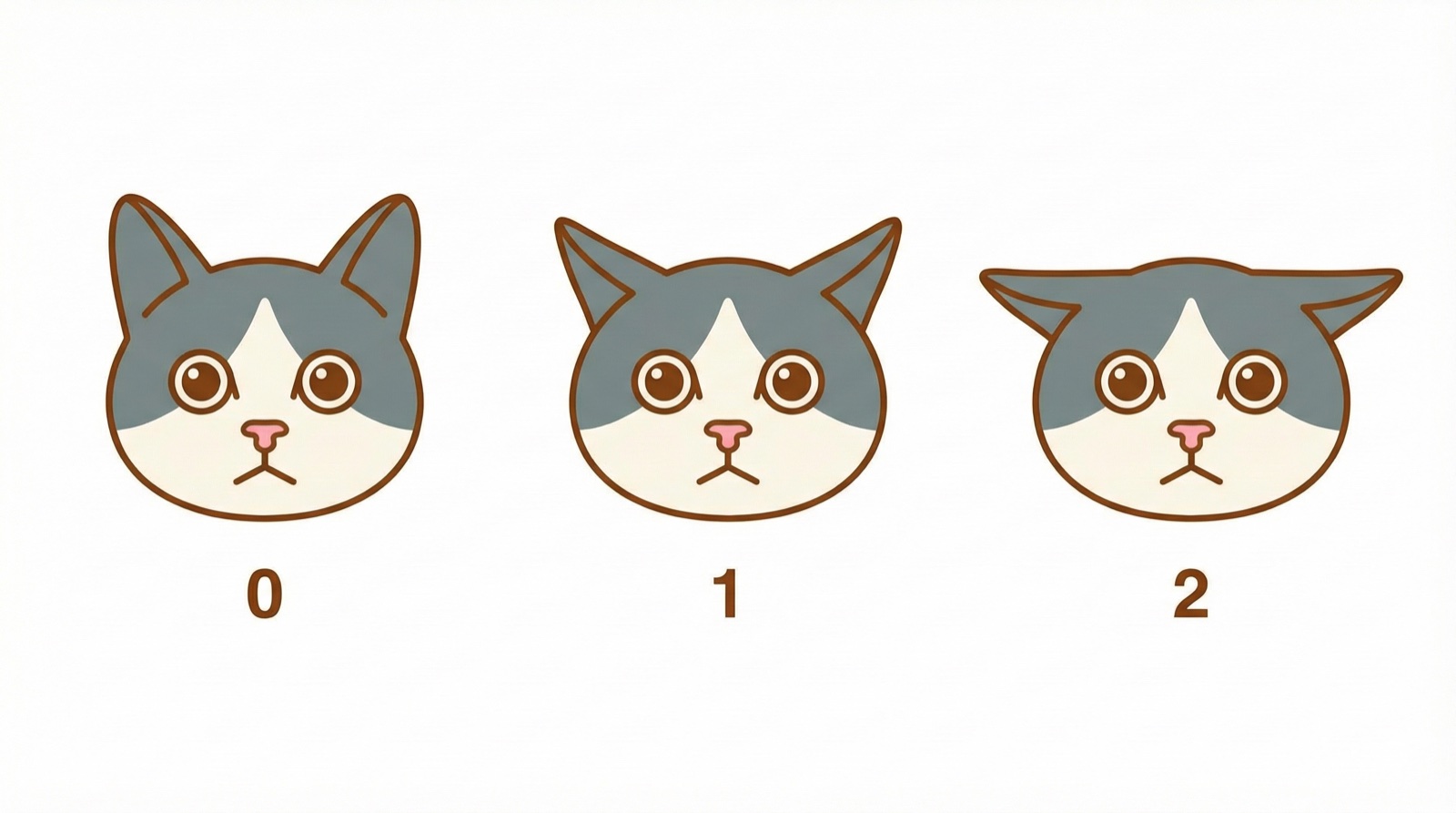
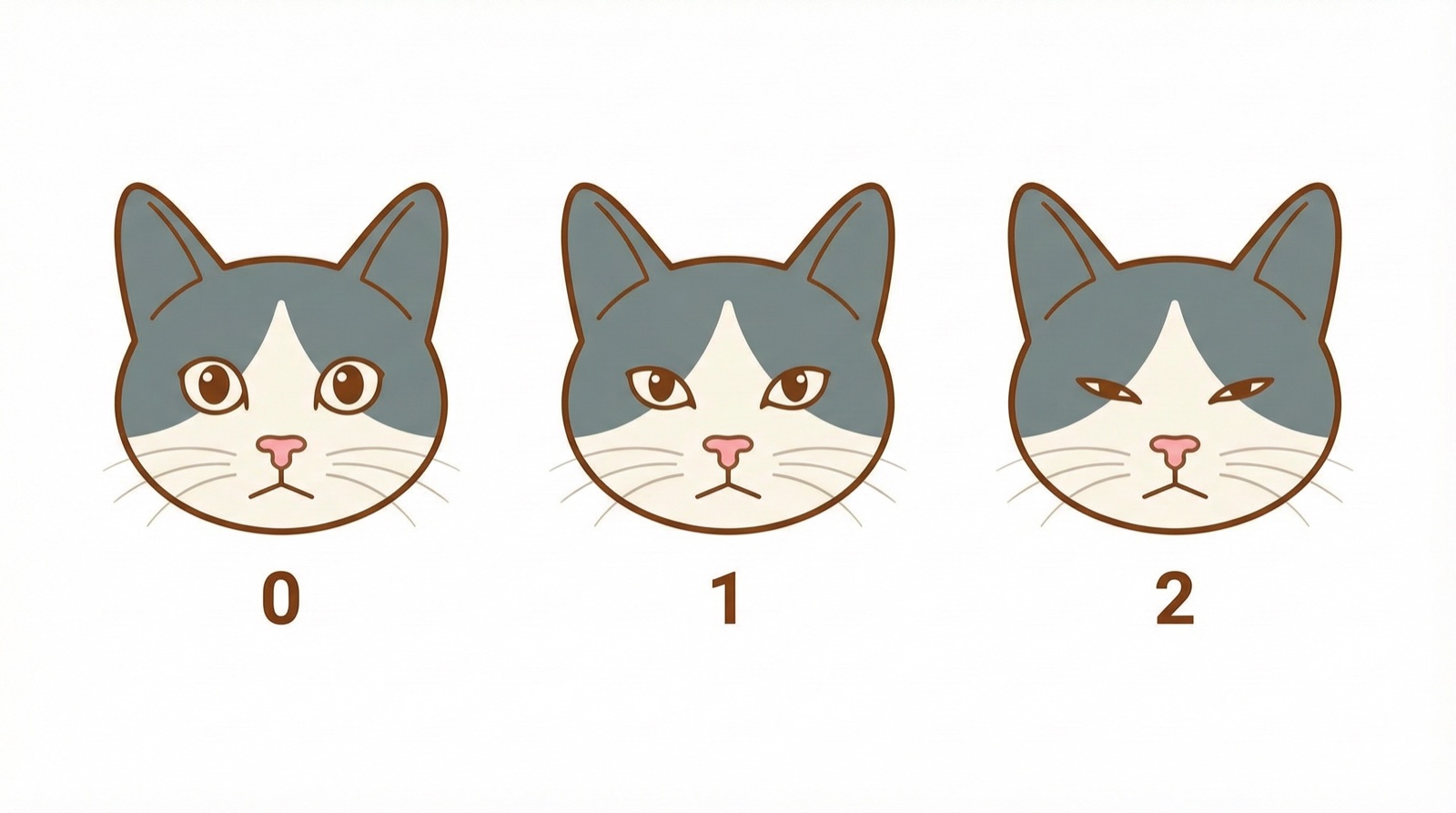
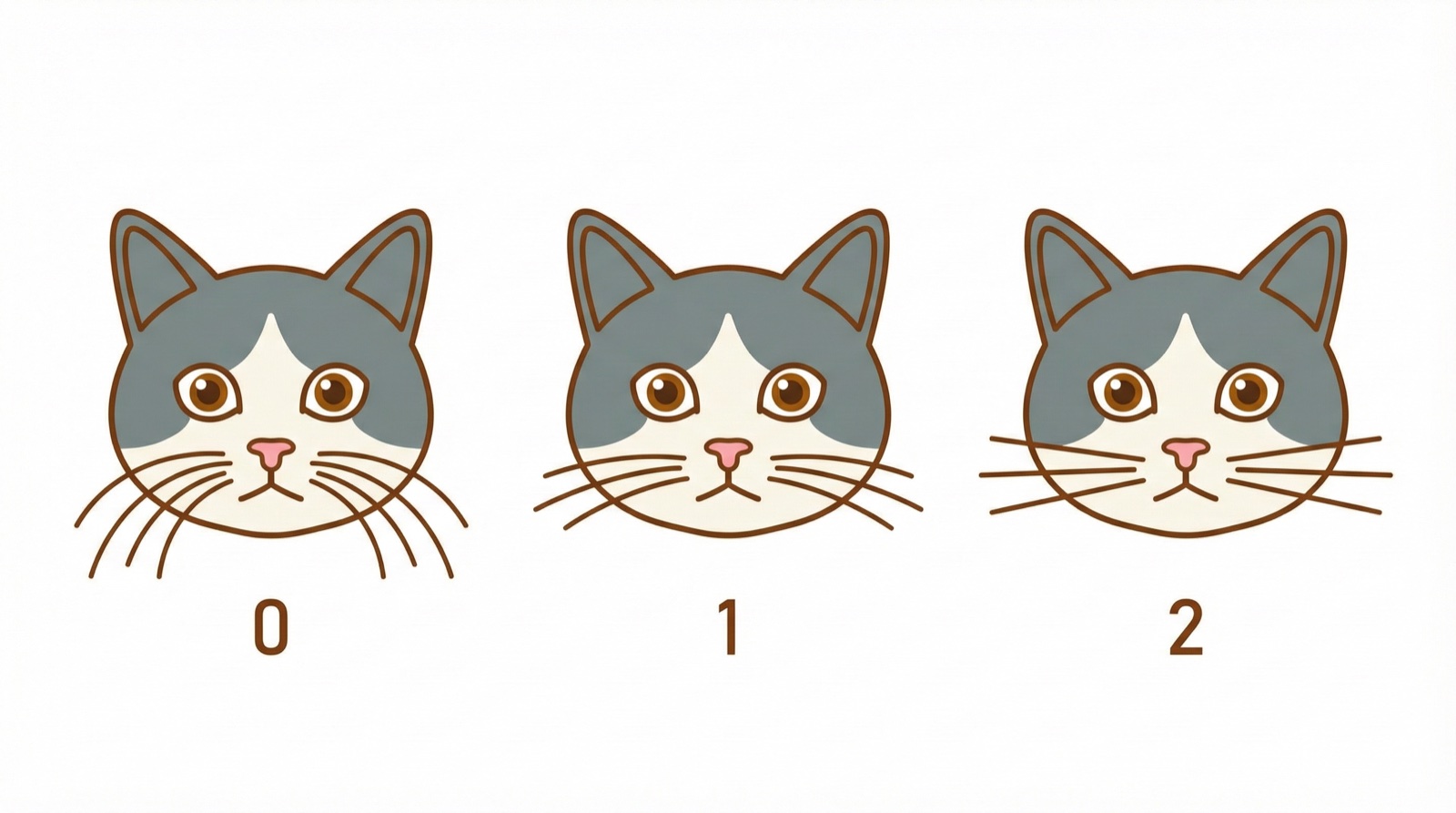
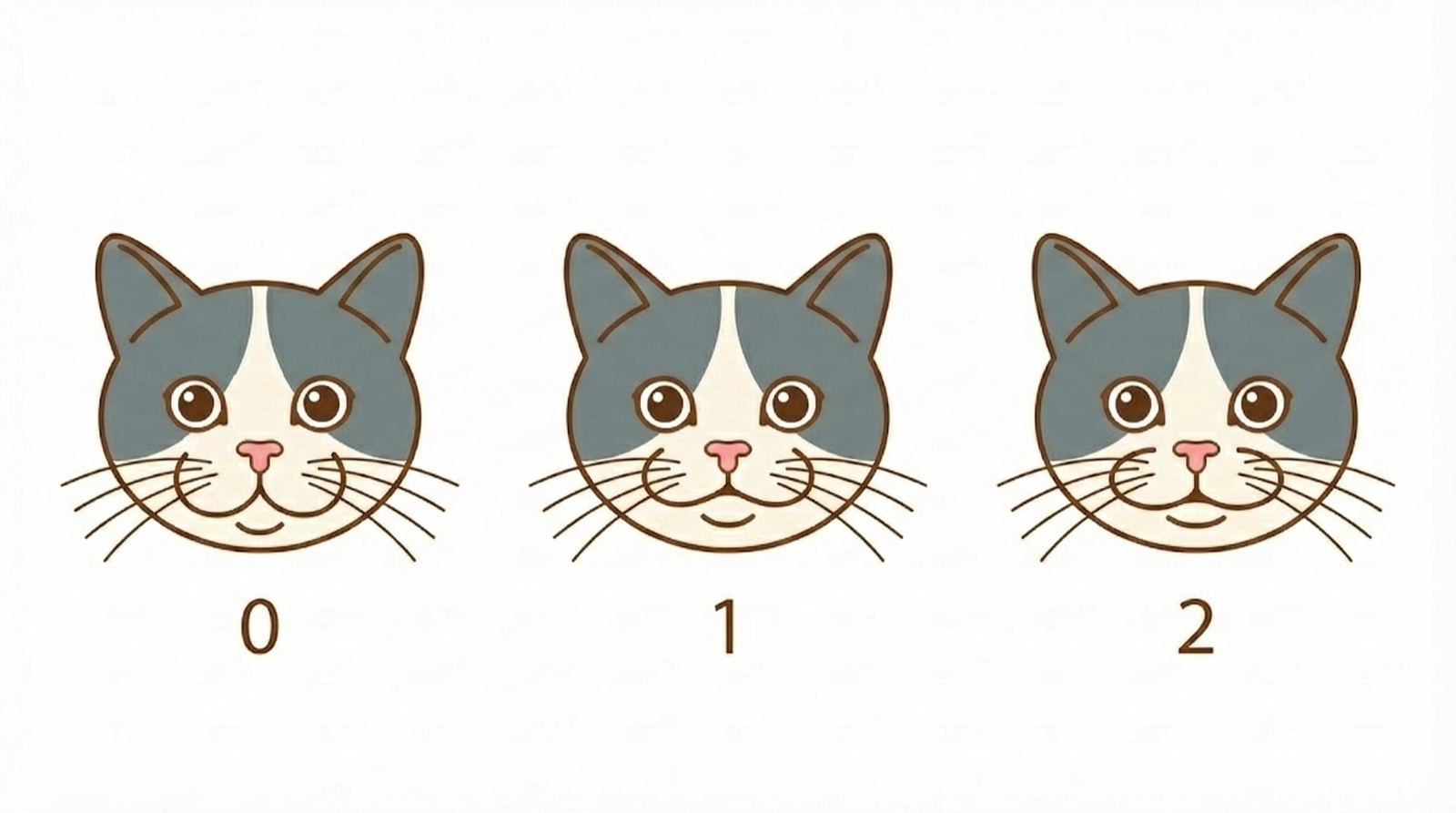
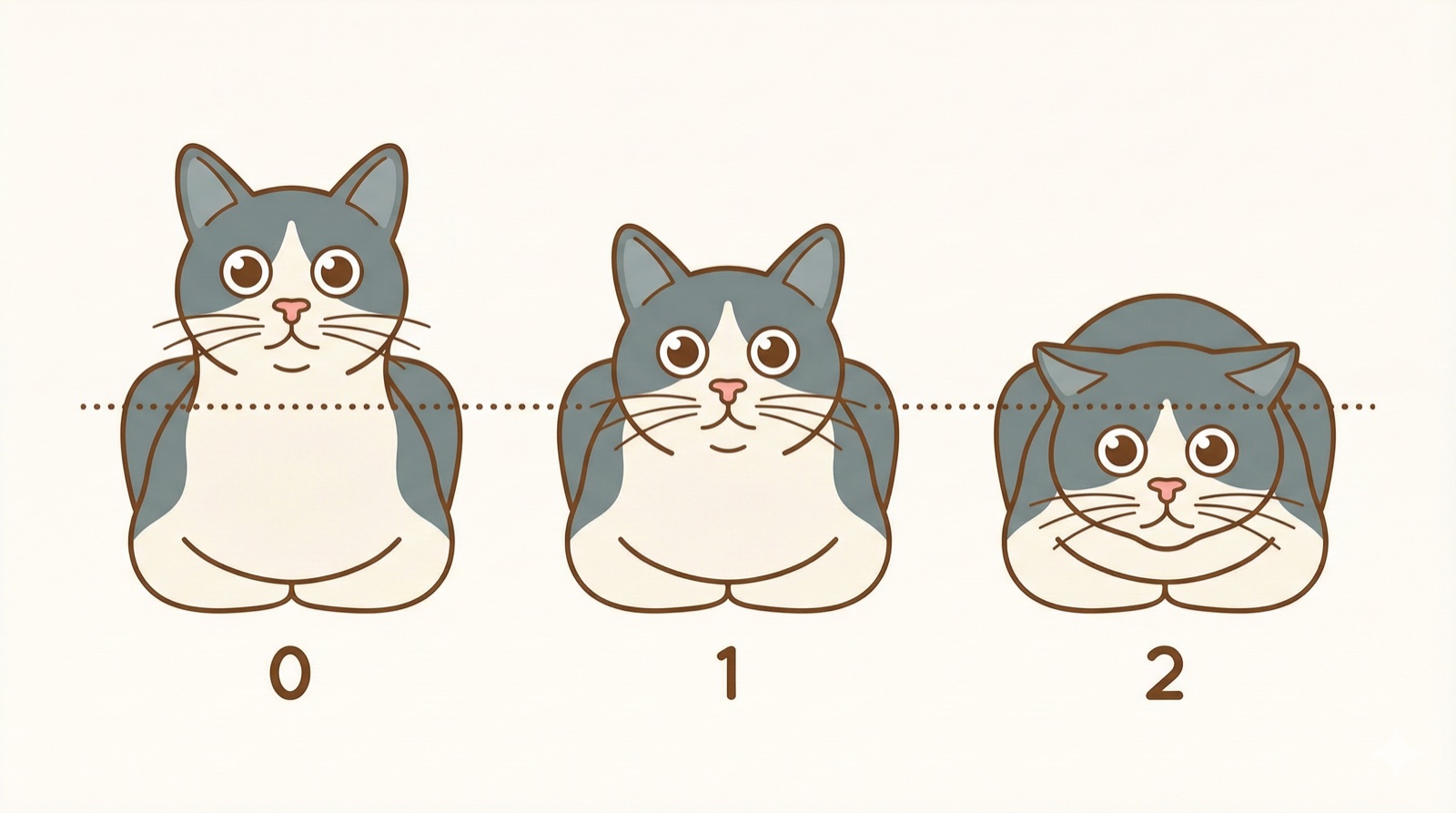
A score of 4 or above suggests the cat may be experiencing acute pain and should be evaluated by a veterinarian. Higher scores mean more confidence that pain is present, not necessarily that the pain is worse.
How to Assess Correctly
Pick a time when your cat is awake but resting quietly. Avoid scoring right after waking, eating, grooming, vocalizing, or during play. Look at the overall picture rather than fixating on one feature. Knowing your cat’s normal baseline expression matters; a slightly squinted resting face is just that cat, not pain.
Common mistakes: confusing sleepy eyes for pain squinting, and scoring after a single quick look. Observe at multiple moments before drawing a conclusion. If you’re not sure, take a clear, well-lit photo and reassess later.
When the Grimace Scale Doesn’t Apply
The Grimace Scale was designed and validated for awake, alert, naturally-occurring acute pain. It is not reliable in several situations:
- A sleeping cat. Closed eyes during sleep are not pain squinting. Wait until your cat is awake and at rest.
- A heavily sedated cat or one recovering from anesthesia. Sedation changes facial muscle tone independently of pain.
- A cat wearing an e-collar or recovery cone. The cone changes head position and partially obscures the face.
- Brachycephalic (flat-faced) breeds, including Persians, Exotic Shorthairs, and British Shorthairs. Their baseline muzzle and ear positions differ from the cats in the original validation set, and recent work suggests pain can be overestimated by image-based scoring in these breeds. The scale can still be useful for these cats, but compare against your own cat’s individual baseline rather than the published reference photos.
- Sphynx, Devon Rex, and other cats with very sparse or curly whiskers. The whisker action unit is hard to score reliably. Weight the other four features more heavily.
- Senior cats with cognitive dysfunction. Baseline facial expression may be altered by the disease itself, not pain.
In any of these situations, lean more on behavioral signs (next section) and on a vet exam.
Other Pain Signs Worth Watching
Facial expression is the most validated cue, but behavior gives you a second channel that often catches what the face misses, especially in cats whose face is hard to score.
Movement and activity. Fewer or smaller jumps, hesitation before jumping (the cat measures twice), an altered gait, holding a paw up, stiffness on rising, lying down more than usual. A cat that used to leap onto the kitchen counter and now hops onto a chair first is telling you something.
Daily routine. Decreased appetite, drinking changes, altered litter box behavior, reduced or excessive grooming, grooming only certain areas, or unkempt fur on parts of the body that used to be well-kept.
Social and behavior. Hiding more often, reduced interest in interaction, withdrawal from family routines, new aggression when touched (especially in a specific spot), flinching, or reluctance to be picked up the way they used to be.
Sound. Most cats stay quiet when in pain. Vocalization is unreliable as a pain signal; absence of vocalization does not mean absence of pain. A previously quiet cat who is suddenly yowling, especially at night, deserves a vet check.
Reading body posture and behavior together is essentially the same skill as reading mood, just calibrated to look for “this is unusual for this cat” rather than absolute thresholds.
Chronic Pain: The Quiet Epidemic in Senior Cats
If your cat is over about 7 years old, chronic pain becomes the more common problem, and it is dramatically under-diagnosed.
Radiographic studies of older cats find degenerative joint disease in the majority of them. One often-cited finding is that around 90% of cats over 12 years old have radiographic evidence of degenerative joint disease, and a more recent prevalence estimate found osteoarthritis in roughly 60% of cats over 6 years. Most of those cats have never been diagnosed. Their owners describe them as “slowing down with age” when what is actually happening is osteoarthritis pain.
Here is the part most owners miss: cats with bilateral arthritis usually don’t limp. Limping requires one good leg and one painful leg to favor it. When both hips, both elbows, or both stifles are hurting, the cat just moves less. They jump less, climb less, groom less, play less. The signal looks like aging, not injury, which is why it slips past so many owners.
What to watch for instead of limping:
- Hesitation before jumping up onto furniture, or breaking the jump into two stages
- Avoiding stairs, or going up/down one at a time
- Reduced grooming, especially the back, base of tail, and rear legs (these are hardest to reach with stiff joints), leading to matted or greasy fur
- Sleeping more in a single chosen spot rather than circulating around the house
- Reluctance to be picked up or to have hindquarters touched
- Litter box accidents, especially in cats who used to be reliable, because high-sided boxes hurt to climb into
- Subtle personality changes: less interactive, less playful, more irritable when handled
- A slightly hunched standing posture, or sitting with weight shifted off a particular limb
A useful at-home tool is the Feline Musculoskeletal Pain Index (FMPI), a questionnaire developed for owners to track their cat’s mobility and activity over time. It is not a diagnosis on its own, but bringing a completed FMPI to a vet visit gives the vet specific information they can act on. Your vet may also use clinical orthopedic exams and, when needed, radiographs.
If you have a senior cat and have never raised the possibility of arthritis with your vet, raise it. Treatment options have improved a lot in the last few years.
What Vets Can Prescribe (and why it has to be a vet)
Several medications and biologics genuinely work for feline pain, but all of them must be vet-prescribed, dosed for cats specifically, and often combined with screening bloodwork. The point of listing them here is so you know real options exist, and you don’t reach for the wrong things at home.
For acute pain (after surgery, injury, dental work), vets commonly use opioids like buprenorphine, the cat-licensed NSAID robenacoxib (Onsior), and gabapentin for both pain and the anxiety that amplifies it. Meloxicam is used in some countries for short-term feline pain but has stricter caveats in cats than in dogs because of renal risk.
For chronic arthritis pain, the biggest recent change is frunevetmab (Solensia, called Zenoraq in Japan), a monoclonal antibody given as a monthly injection by a vet that targets the nerve growth factor pathway involved in arthritis pain. It is the first approved feline-specific biologic for OA pain and has been a real improvement for many cats. Gabapentin is also widely used for chronic pain and for vet-visit-related stress.
Supplements like glucosamine and omega-3 fatty acids have a place in the longer-term plan, but they are slower-acting and do not replace pain medication for a cat in active discomfort.
Real options exist for feline pain. They just have to come from a vet.
When to See a Vet
Move to a vet visit if you see any of the following:
- Feline Grimace Scale score of 4 or above
- Pain signs that persist more than 24 hours
- Other symptoms appearing at the same time, especially not eating, not drinking, vomiting, or diarrhea
- Limping, stiffness, or refusing to move
- A strong reaction when touching a specific area
- Any senior cat with reduced jumping, grooming, or activity that has been creeping in gradually
- Any suspected human-medication exposure, no matter how minor it seems
Cats hide pain by design, which means your job is to look harder than the cat is hiding. Score them when something seems off, watch the behavioral picture over time, and if the answer points toward pain, do not wait it out or improvise at home.
How Furwise Can Help
Chronic pain is caught early by noticing patterns, not single moments. Each small change is easy to dismiss on its own; the trend over weeks is what gives it away. Furwise lets you log mobility, grooming, appetite, and behavior week to week, so the gradual slide that arthritis pain typically causes shows up clearly instead of staying invisible. You can also run the Feline Grimace Scale through the app and save those scores against the same timeline.
Frequently Asked Questions
How do I know if my cat is in pain? Watch for facial signs (squinted eyes, ears pulled apart and rotated outward, tense whiskers, a tense muzzle, a lowered head) and behavioral signs (hiding, not eating, less jumping, reduced grooming, flinching when touched). The Feline Grimace Scale scores the facial features 0 to 2 each; a total of 4 or higher suggests acute pain. For older cats, watch for reduced activity rather than dramatic limping, because bilateral arthritis usually does not produce a visible limp.
Can I give my cat Tylenol, ibuprofen, aspirin, or other human painkillers? No. Acetaminophen (Tylenol, paracetamol) is rapidly toxic to cats because they lack a key enzyme that humans use to metabolize it; even one tablet can be fatal. Ibuprofen and naproxen cause acute kidney injury and stomach bleeding at small doses. Aspirin has a narrow feline-specific dose and is rarely used at home. If your cat is in pain, call a vet for safe, feline-specific options.
How do I know if my cat has arthritis? Look for slow gradual changes rather than a sudden limp. Reduced or smaller jumps, hesitation before jumping, avoiding stairs, less grooming (especially of the back and tail base), matted or greasy fur, sleeping more in one place, irritability when handled, and litter box accidents are the classic picture. Most cats with arthritis have both sides affected, so they slow down rather than limp. If your cat is over about 7 years old, it is worth bringing up with your vet.
What painkillers can a vet prescribe for cats? For acute pain, vets use opioids like buprenorphine, the cat-licensed NSAID robenacoxib, and gabapentin. Meloxicam is used in some countries for short-term feline pain. For chronic arthritis pain, frunevetmab (Solensia/Zenoraq), a monthly injection antibody, is a meaningful recent addition. Gabapentin is also used for chronic pain and stress. All of these require a vet exam, sometimes bloodwork, and proper feline-specific dosing.
Do cats limp when they are in pain? Sometimes, but not always. A cat with a single painful leg may limp because the other three legs can pick up the load. A cat with arthritis in both hips or both knees usually does not limp, because there is no good leg to favor. Instead, they jump less, climb less, slow down, and stop grooming hard-to-reach areas. Owners often miss this because it looks like normal aging.
Why does my cat purr when they are sick? Purring is not a reliable “happy” signal. Cats also purr when frightened, in pain, and during illness or end-of-life states. The current best guess is that purring may be self-soothing or even physiologically beneficial (the frequency overlaps ranges thought to support tissue healing). The takeaway: a purring cat that is also hiding, not eating, or scoring high on the Grimace Scale is still a cat in pain.
What is the Feline Grimace Scale, and when should I not use it? The Feline Grimace Scale is a validated tool developed in 2019 for assessing acute pain in cats by scoring five facial features. Do not use it on a sleeping, sedated, or cone-wearing cat. Use it cautiously with brachycephalic breeds (Persian, Exotic Shorthair) and with sparse-whiskered breeds (Sphynx, Devon Rex). It was not designed for chronic arthritis pain; for that, use behavioral signs over time and consider the FMPI questionnaire.
Can cats cry tears from pain? No. Cats do not cry emotional tears from pain the way humans can. Watery eyes in a cat usually indicate eye irritation, infection, or upper respiratory issues, not pain elsewhere. Some cats may vocalize when in acute pain (yowl, hiss, growl), but many stay completely silent. Facial expression and behavior are more reliable cues than tears or sound.
References
- Evangelista, M. C., et al. (2019). Facial expressions of pain in cats: The development and validation of a Feline Grimace Scale. Scientific Reports, 9, 19128. DOI
- Evangelista, M. C., Benito, J., Monteiro, B. P., Watanabe, R., Doodnaught, G. M., Pang, D. S. J., & Steagall, P. V. (2020). Clinical applicability of the Feline Grimace Scale: real-time versus image scoring and the influence of sedation and surgery. PeerJ, 8, e8967. DOI
- Steagall, P. V., Robertson, S., Simon, B., Warne, L. N., Shilo-Benjamini, Y., & Taylor, S. (2022). 2022 ISFM Consensus Guidelines on the Management of Acute Pain in Cats. Journal of Feline Medicine and Surgery, 24(1), 4–30. DOI
- Merola, I., & Mills, D. S. (2016). Behavioural signs of pain in cats: An expert consensus. PLoS ONE, 11(2), e0150040. DOI
- Slingerland, L. I., Hazewinkel, H. A. W., Meij, B. P., Picavet, P., & Voorhout, G. (2011). Cross-sectional study of the prevalence and clinical features of osteoarthritis in 100 cats. The Veterinary Journal, 187(3), 304–309. DOI
- Hardie, E. M., Roe, S. C., & Martin, F. R. (2002). Radiographic evidence of degenerative joint disease in geriatric cats: 100 cases (1994–1997). Journal of the American Veterinary Medical Association, 220(5), 628–632.
- Benito, J., Hansen, B., DePuy, V., Davidson, G. S., Thomson, A., Simpson, W., Roe, S., Hardie, E., & Lascelles, B. D. X. (2013). Feline musculoskeletal pain index: Responsiveness and testing of criterion validity. Journal of Veterinary Internal Medicine, 27(3), 474–482. DOI
- Klinck, M. P., Monteiro, B. P., Lussier, B., Guillot, M., Moreau, M., Otis, C., Steagall, P. V. M., Frank, D., Martel-Pelletier, J., Pelletier, J. P., & Troncy, E. (2018). Refinement of the Montreal Instrument for Cat Arthritis Testing, for use by veterinarians: Detection of naturally occurring osteoarthritis in laboratory cats. Journal of Feline Medicine and Surgery, 20(8), 728–740. DOI
- Court, M. H. (2001). Acetaminophen toxicosis in cats. The Canadian Veterinary Journal, 42(11), 855.
- Feline Grimace Scale. felinegrimacescale.com