
A little crust in the corner of the eye after a nap is normal. A cat whose eye is constantly watering, gluing itself shut, or weeping something thick and yellow is not. The eye is one of the few places on a cat where a small problem can turn serious fast, so it helps to know what the discharge is telling you. This guide covers the common causes, how to clean your cat’s eyes safely, and the signs that mean a vet visit cannot wait.
When eye discharge is normal, and when it isn’t
Cats produce tears all day long. Tears keep the surface of the eye clean and healthy, then drain away through a tiny channel into the nose. Most of this happens invisibly. A small fleck of dark or reddish crust in the inner corner, especially first thing in the morning, is just dried tears and nothing to worry about.
The picture changes when the discharge becomes constant, changes color, or shows up with other signs. An eye that waters all the time, a corner that crusts over again within hours of being wiped, discharge that turns yellow or green, redness, swelling, or a cat that squints or paws at its face: those are the things worth paying attention to. The amount matters, the color matters, and so does whether your cat seems bothered by it.
What the discharge is telling you
The look of the discharge is the fastest clue you have. It does not give you a diagnosis, but it does tell you how worried to be.
| What you see | What it usually means | What to do |
|---|---|---|
| Clear, watery overflow | Tears not draining, or mild irritation | Watch briefly; see a vet sooner if it is sudden, one-sided, or your cat seems bothered |
| Thick yellow or green discharge | Infection, often conjunctivitis | Book a vet visit, this needs treatment |
| Reddish-brown staining below the eye | Dried tears from long-term overflow | Usually cosmetic; mention ongoing staining to your vet |
| Discharge with redness and squinting | A painful problem such as a corneal ulcer | See a vet the same day |
Clear and watery is the mildest version. It often means tears are being made faster than they can drain, or the eye is mildly irritated. Thick, colored, sticky discharge points the other way: it usually means infection, and infection needs treatment rather than watching. The reddish-brown staining some cats get down the side of the nose is dried tear pigment, more of a cosmetic issue than a medical one, though it does tell you tears have been overflowing for a while. And any discharge that comes packaged with squinting or a held-shut eye should move to the front of the queue, because that combination suggests pain.
One eye or both eyes
A problem in one eye only tends to be local: a scratch on the surface, a foreign object caught under the eyelid, a blocked tear duct on that side, or an injury from a scuffle or a swipe. A problem in both eyes more often points to something that arrived through the body rather than from the outside, such as a viral infection or cat flu. This is a rule of thumb rather than a law, and herpesvirus in particular can start in one eye before involving the other, but one eye versus two is a good first thing to check.
What causes eye discharge in cats
Conjunctivitis and cat flu
Conjunctivitis, inflammation of the pink tissue that lines the eyelids, is the single most common reason a cat’s eye runs. The eye looks red and puffy, and the discharge can range from watery to thick and yellow.
In cats, the leading cause is feline herpesvirus, the same virus behind much of what owners call cat flu. Other infectious causes include Chlamydia felis and Mycoplasma, which tend to hit the eyes hard, and feline calicivirus. When eye discharge shows up alongside sneezing and a runny nose, an upper respiratory infection is usually the reason, and the eyes and nose are simply two fronts of the same illness.
Herpesvirus has one frustrating feature worth knowing. Most cats that catch it become lifelong carriers, with the virus going quiet and then flaring up again at times of stress. So a cat can have a weepy, red eye months or years after the original infection, with no new cat anywhere nearby.
Corneal injuries and ulcers
The cornea is the clear dome at the front of the eye. A scratch on it, from a cat fight, a stray claw, an overenthusiastic play session, or a foreign body, can turn into a corneal ulcer. Herpesvirus can cause ulcers too.
This is the cause that matters most, because a corneal ulcer is painful and can get worse quickly. A cat with one will usually squint, hold the eye shut, paw at its face, and shy away from light. The eye may look cloudy or hazy. An untreated ulcer can deepen over a day or two and, in the worst cases, threaten the eye itself. Anything that looks like a corneal ulcer is a same-day vet visit.
A painful, cloudy, or very red eye is not always an ulcer, though. Conditions such as glaucoma and uveitis, which is inflammation inside the eye itself, cause similar signs and are just as urgent. That is the real point: a clearly painful eye needs a vet rather than guesswork, whatever the underlying cause turns out to be.
A blocked tear duct
Tears normally drain off the eye through a narrow channel that runs into the nose. If that channel gets blocked or scarred, often after a bout of herpesvirus, tears have nowhere to go and simply spill over the lower lid. The result is an eye that waters constantly without necessarily being red or infected. It is more of a nuisance than an emergency, but a vet can confirm it and, in some cases, flush the duct.
Dry eye
Most eye discharge involves too many tears or poor drainage, but the reverse can also happen. In dry eye, the eye does not make enough tears, and a thick, sticky discharge builds up because the surface is no longer being washed and lubricated properly. It is less common in cats than in dogs, and when it does happen it often traces back to a past herpesvirus infection. A vet can measure tear production with a quick, painless test, so dry eye is worth raising if your cat has a persistently goopy eye that does not behave like a typical infection.
A foreign body
Something small can lodge under an eyelid or behind the third eyelid: a grass seed, a piece of litter, a bit of plant material. The signs are usually sudden and one-sided, with a lot of watering, squinting, and pawing. A foreign body needs a vet to find and remove it, and trying to dig it out at home risks scratching the cornea.
Breed and eyelid shape
Flat-faced breeds such as Persians, Exotic Shorthairs, and Himalayans are built in a way that makes tearing common. Their shallow eye sockets and distorted tear ducts mean tears overflow easily, which is why these cats so often have stained fur below the eyes. Eyelid problems also play a part: in entropion, the eyelid rolls inward so the fur rubs against the eye, causing constant irritation and discharge until it is corrected.
Signs that mean a vet visit cannot wait
Most eye discharge can wait a day for a regular appointment. A painful eye cannot. Pain is the dividing line, and cats show it in fairly specific ways.
A squinting or painful eye needs a same-day vet
If your cat is squinting, holding an eye shut, pawing or rubbing at it, avoiding light, or the eye looks cloudy or hazy, treat it as urgent. These are the signs of a corneal ulcer or other painful eye condition, and an eye problem can worsen within a day or two. Do not wait to see if it settles, and do not put any leftover or human eye drops in first, as the wrong drop can make an ulcer dramatically worse.
When to book a regular vet visit
Short of those urgent signs, plenty of eye discharge still deserves a vet’s attention, just not an emergency dash. Make an appointment if you notice any of the following:
- Discharge that lasts more than a day or two
- Thick yellow or green discharge in one or both eyes
- An eye that keeps crusting shut after you clean it
- Redness or mild swelling of the eyelids
- Watering that comes back again and again
- Eye discharge alongside sneezing, a runny nose, or low appetite
Kittens belong in this group too. Newborn and very young kittens can develop serious eye infections, sometimes before their eyes have even opened, and they should be seen promptly rather than watched.
How to clean your cat’s eyes safely
While you are waiting for an appointment, or managing a mild flare your vet already knows about, gentle cleaning keeps your cat comfortable. Dried discharge is uncomfortable and can mat the fur around the eye.
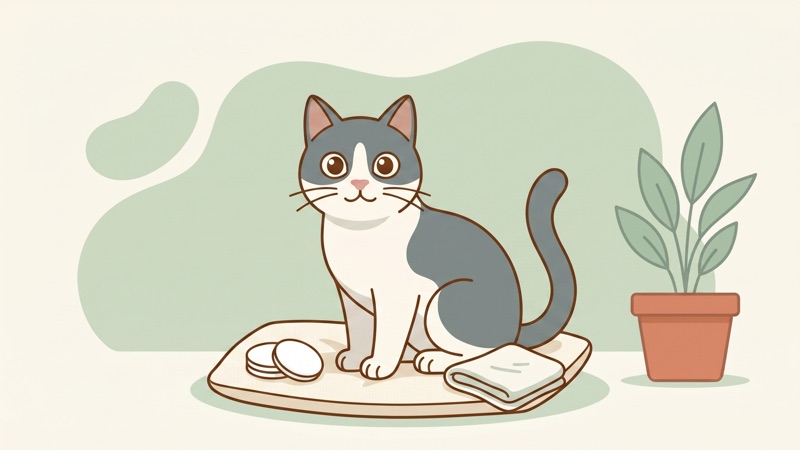
Dampen a clean cotton pad or a soft cloth with warm water, or with sterile saline if you have it. Wipe gently from the inner corner outward, following the direction the discharge naturally flows. Use a fresh pad for each eye, every time, and never the same one twice. If one eye has an infection, a reused pad will carry it straight to the other. Wiping a couple of times a day is usually enough while discharge is present.
A few things to avoid. Do not use human eye drops, contact lens solution, or any medicated drops left over from a previous problem. Some human drops contain ingredients that can badly worsen an undiagnosed corneal ulcer or a herpesvirus eye. Do not try to force a stuck-shut eye open, and do not poke at the surface of the eye. Plain water or saline on the fur around the eye is safe. Anything that goes into the eye itself should come from your vet.
What treatment looks like
Treatment depends entirely on the cause, which is why a diagnosis matters before any medication goes in. A vet can examine the eye, often using a harmless stain that makes a corneal ulcer light up, and treat what they actually find.
Bacterial conjunctivitis is usually treated with topical antibiotic drops or ointment. A chlamydial infection is different: it usually needs a course of oral antibiotics rather than drops alone, because topical treatment on its own often fails to fully clear it. A herpesvirus eye may be managed with antiviral medication and supportive care, since there is no cure for the virus itself. A corneal ulcer needs pain relief and protection from infection while it heals, sometimes with a protective collar to stop your cat rubbing it, and a deep ulcer may need surgery. A blocked tear duct can sometimes be flushed clear. A foreign body simply needs to be removed.
The one constant across all of these is that steroid-containing eye drops are off the table until a vet has ruled out an ulcer, because steroids can make an ulcer or a herpesvirus infection considerably worse. That is the real reason not to reach for a leftover tube at home. A leftover drop might do nothing useful, but the wrong one can actively harm the eye.
Lowering the chances of eye trouble
You cannot prevent every weepy eye, but a few habits tilt the odds.
Keeping your cat up to date on the core FVRCP vaccine helps, since it covers herpesvirus and calicivirus and makes the eye-related illness they cause milder. Keeping everyday stress low matters too, because stress is the main trigger for herpesvirus flares, and a settled cat has fewer of them. A low-dust environment spares the eyes from constant irritation. And for flat-faced breeds, gentle routine cleaning of the eye area and regular vet checks are part of normal care rather than a sign something has gone wrong.
Beyond that, simply paying attention helps. Cats are good at carrying on as normal, so a quick daily glance at both eyes, clear, bright, and equal, means you catch the small problems while they are still small.
How Furwise Can Help
Eye problems are much easier to describe to a vet when you have tracked them. Furwise lets you photograph the discharge, note which eye is affected and when it started, and log whether it is getting better or worse. When you reach the clinic, you can answer the questions that actually guide diagnosis, one eye or both, how long, and whether your cat seems to be in pain, without relying on memory.
A bit of crust in the corner after a nap is just a cat being a cat. Constant watering, colored discharge, or an eye that crusts shut usually means an infection that needs treatment, and conjunctivitis from cat flu is the most common reason of all. The signal that should never wait is pain: a squinting, cloudy, or painful eye points to a corneal ulcer and needs a vet the same day. When you are unsure, the color of the discharge, whether one eye or both are affected, and how much it seems to bother your cat are the three things that will guide you best.
Frequently Asked Questions
Is a little eye discharge normal in cats? Yes. A small amount of dark or reddish crust in the inner corner of the eye, especially after sleep, is just dried tears and is completely normal. What is not normal is discharge that is constant, thick, yellow or green, or comes with redness, swelling, or squinting. The amount and the color are what tell you whether to be concerned.
Why does my cat have discharge in only one eye? Discharge in just one eye usually points to a local problem: a scratch or ulcer on the surface, a foreign object caught under the eyelid, a blocked tear duct on that side, or an injury. Discharge in both eyes is more often a sign of an infection such as cat flu. It is a rule of thumb rather than a certainty, but it is a useful first question.
Can I use human eye drops on my cat? No. Never put human eye drops or leftover medicated drops in a cat’s eye. Some contain ingredients, particularly steroids, that can seriously worsen an undiagnosed corneal ulcer or a herpesvirus infection. Wiping the eye with plain warm water or sterile saline is safe, but any medicated drops should be prescribed by a vet who has examined the eye.
What does the brown staining under my cat’s eyes mean? The reddish-brown stain is dried tear pigment, left behind when tears overflow onto the fur instead of draining away. It is common in flat-faced breeds whose tear ducts do not drain well. The staining itself is mostly cosmetic, but persistent overflow is worth mentioning to your vet, since it can occasionally point to a blocked duct.
How do I clean my cat’s eyes safely? Use a clean cotton pad or soft cloth dampened with warm water or sterile saline. Wipe gently from the inner corner outward, and use a fresh pad for each eye so you do not spread an infection from one to the other. Do not use human eye drops, do not force a stuck-shut eye open, and do not touch the surface of the eye itself.
When is cat eye discharge an emergency? Treat it as urgent if your cat is squinting, holding an eye shut, pawing at it, avoiding light, or the eye looks cloudy or hazy. These are signs of a corneal ulcer or another painful condition, and eye problems can worsen within a day or two. A painful eye should be seen the same day rather than watched at home.
References
- Cornell Feline Health Center. Conjunctivitis. Cornell University
- Thiry, E., et al. (2009). Feline Herpesvirus Infection: ABCD Guidelines on Prevention and Management. Journal of Feline Medicine and Surgery, 11(7), 547-555. DOI
- European Advisory Board on Cat Diseases (ABCD). Guideline for Chlamydia felis. abcdcatsvets.org
- Hartley, C. (2010). Treatment of Corneal Ulcers: What are the Medical Options? Journal of Feline Medicine and Surgery, 12(5), 384-397. DOI