Feline Lower Urinary Tract Disease (FLUTD) is one of the most common reasons cats end up at the vet. For male cats, a complete urethral blockage is a true emergency that can be fatal within 24 to 48 hours. This guide covers how to spot the signs, what’s actually causing them, the current standard of care for treatment, and how to lower the chance of another flare.
If your male cat is straining with little or no urine right now
This is not something to watch overnight. A male cat repeatedly trying to pee and producing nothing or just drops needs an emergency vet within hours, not by the end of the day. Hyperkalemia and acute kidney injury can develop fast, and the cat is in real pain. Skip the home remedies (cranberry, apple cider vinegar, hot compresses), skip the wait-and-see, and go.
What is FLUTD?
“Feline Lower Urinary Tract Disease” is an umbrella term for anything that inflames or obstructs the bladder and urethra. Rather than a single diagnosis, it is a set of clinical signs that can have very different underlying causes.
The cause breakdown across published case series looks roughly like this:
| Cause | Share of cases |
|---|---|
| Feline Idiopathic Cystitis (FIC) | ~53% |
| Urolithiasis (crystals and stones) | ~29% |
| Urethral plugs | ~18% |
True bacterial urinary tract infections are uncommon on top of this in young cats, but become a bigger slice once you look at cats over 10, particularly those with kidney disease, diabetes, or hyperthyroidism. More on that in a moment.
Why male cats are at higher risk
Male cats have a longer, narrower urethra than females, and inside the penis the diameter is about 1 millimeter. Crystals, stones, or a soft plug of debris can wedge there and shut off urine flow completely.
Once the urethra is fully blocked, urine has nowhere to go. Toxins build up, kidneys start failing, and potassium rises in the blood. The combination can cause cardiac arrhythmias before the bladder ever ruptures. It is one of the few situations in feline medicine where hours genuinely matter.
Recognizing the signs
Most FLUTD episodes look similar from the outside, regardless of the underlying cause:
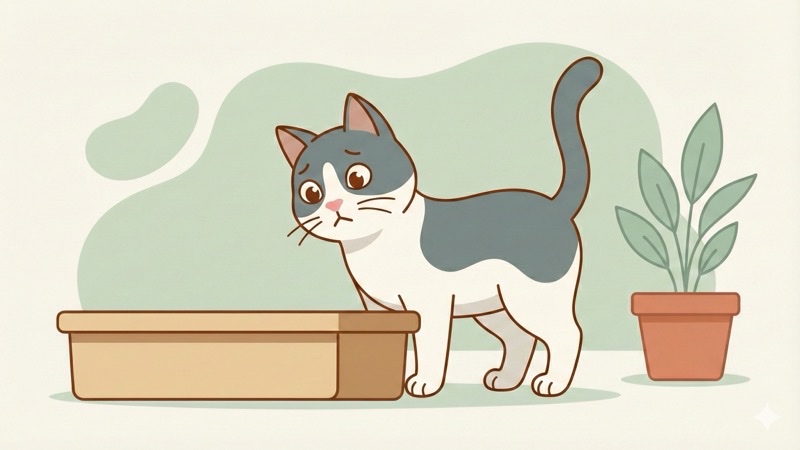
- Frequent trips to the litter box producing very little urine
- Vocalizing, crying, or yowling in the box
- Pink or red tinge to the urine
- Peeing outside the box, often on smooth or cool surfaces like tile or the bathtub
- Excessive licking of the genitals
- Squatting and straining for unusually long stretches
In a female cat or a male cat who is still passing some urine, these signs usually mean an irritated bladder rather than an obstruction. In a male cat with no urine output, assume obstruction until a vet says otherwise.
When to go in immediately
Beyond the male-cat emergency at the top of this article, take any of these as a same-day vet visit, even for female cats:
- Repeated, painful trips to the box with little or nothing to show for it
- A visibly distended abdomen that the cat resents being touched
- Vomiting, lethargy, or a complete loss of appetite alongside the urinary signs
- Weakness or trouble standing
Cats hide pain well. By the time someone is openly vocalizing in the litter box, they have been uncomfortable for a while.
What’s actually causing it
Feline Idiopathic Cystitis (FIC)
FIC is the most common diagnosis and the hardest one for owners to wrap their heads around, because by definition all the obvious causes (infection, stones, tumor) have been ruled out. The bladder is inflamed, the cat is miserable, and there is no single thing to point at. A vet still has to actively rule out obstruction and stones first, especially in male cats. FIC is a diagnosis you arrive at, not one you assume.
The 2025 international consensus reframes FIC as a threat-responsive disorder, sometimes called Pandora syndrome. The short version: certain cats have a dysregulated stress response that can affect the bladder along with other body systems. When they perceive a threat (a new pet, renovations, a missed feeding, anything the cat reads as wrong), the bladder is one of several organs that flares. It is not “just stress in the head.” It’s a whole-cat disorder that happens to show up in the urinary tract.
Common triggers worth knowing:
- Moves, renovations, new furniture, even rearranged rooms
- New people or pets in the home, or someone moving out
- Litter box setup problems like too few boxes, hooded boxes the cat dislikes, or boxes that aren’t clean enough
- Resource competition in multi-cat households
- Schedule changes, especially around feeding or play
- Outdoor cats appearing in view of the window
Crystals and stones
When urine is concentrated or its mineral balance shifts, minerals can drop out of solution as crystals. Over time, crystals can clump into actual stones. The two most common stone types in cats behave very differently, which is why diagnosis matters:
| Struvite | Calcium oxalate | |
|---|---|---|
| Share of feline stones | ~45% | ~41% |
| Typical age | 2 to 7 years | 8 to 12 years |
| Dissolvable with diet? | Yes | No, must be removed |
| How it’s diagnosed | Imaging plus stone analysis for definitive type | Imaging plus stone analysis for definitive type |
Struvite stones in cats are almost always sterile, unlike struvite in dogs, where infection is usually involved. They often respond to a prescription dissolution diet. Calcium oxalate stones won’t dissolve, so they have to be removed surgically or flushed out by other means. Only a lab analysis of an actual stone (after passage or surgery) gives a definitive answer. X-ray appearance and urine pH can hint, but they don’t substitute for lab confirmation.
Struvite dissolution diets are not for every cat
They are not safe for kittens, pregnant cats, cats with kidney disease, or hypertensive cats, and they should never be started without a confirmed diagnosis and your vet’s supervision. Feeding them long-term to a cat who doesn’t have struvite stones can do real harm.
Urethral plugs
Plugs are soft, almost paste-like clumps of protein, cell debris, crystals, and mucus that wedge in the urethra. They are not the same thing as stones (which are solid). Plugs occur almost exclusively in male cats and are one of the leading reasons a male cat ends up blocked.
Bacterial UTI (more common in older cats than people realize)
In a young, otherwise healthy adult cat with urinary signs, true bacterial UTI is unusual. Most of those cats turn out to have FIC. But the picture shifts with age. By the time a cat is 10 or older, bacterial UTI becomes a real possibility, particularly in cats with chronic kidney disease, diabetes mellitus, hyperthyroidism, or a history of indwelling urinary catheters. Their diluted urine and altered immune defenses give bacteria an easier time.
A useful rule of thumb on age
If a 3-year-old cat has bloody urine and is straining, the odds heavily favor FIC. If a 13-year-old cat with kidney disease has bloody urine, a urine culture for true UTI moves up the list. The treatment paths are very different, which is why your vet will ask about age and existing conditions before deciding what to test.
Diagnosis
A typical workup includes a urinalysis (pH, concentration, blood, protein, crystals), a urine culture if infection is on the table, and bloodwork to check kidney values and electrolytes. X-rays look for stones in the bladder and urethra. Ultrasound can pick up small stones that don’t show on plain radiographs and assess bladder wall thickness.
Collecting a urine sample at home
Do not try this if a male cat is straining with little or no output. That cat needs the ER, not a sample collection attempt. For non-emergency follow-ups where your vet asks for a sample ahead of time, the easiest approach is non-absorbent litter (small plastic beads or aquarium gravel) or hydrophobic litter beads sold for this purpose. Empty the regular litter, swap in the beads for a single use, and pour the resulting urine into a clean container. For a culture, though, a sample drawn directly from the bladder by your vet (cystocentesis) is preferred, because beads and bowls pick up contamination.
Treatment
A urethral obstruction is an emergency measured in hours. Everything else depends entirely on the underlying cause, which is why diagnosis comes first and improvisation comes last.
For FIC: pain control, stress reduction, and hydration
There is no “cure” for FIC in the way an antibiotic cures a UTI. What works is treating each flare for the pain it actually is, and reducing the threat load between flares.
Pain control. FIC hurts. Your vet will likely prescribe gabapentin or transmucosal buprenorphine for in-clinic and short-term home pain control. NSAIDs (like meloxicam or robenacoxib) can have a role in a fully hydrated cat with normal kidney values and a non-obstructive flare, but they are not appropriate for a blocked or dehydrated cat because they can worsen kidney injury. Your vet decides based on bloodwork. Do not give leftover human or pet pain medication on your own. Several common painkillers are toxic to cats at even modest doses.
Prazosin and other urethral relaxants. Older guides routinely sent cats home on prazosin after an unblock. Recent placebo-controlled work has not shown a benefit, and at least one larger multicenter study found higher re-obstruction rates in the prazosin group. Many emergency clinicians no longer prescribe it routinely.
Multimodal Environmental Modification (MEMO). This is the part owners actually drive, and it’s where the biggest long-term wins live. The basics:
- One litter box per cat plus one extra, in quiet, low-traffic locations the cat actually likes
- Unscented clumping litter most cats prefer, scooped at least daily
- Vertical space (cat trees, window perches, shelves) so each cat can have their own territory
- Predictable feeding times and play sessions
- A safe retreat the cat can go to without being followed
- Talk to your vet about pre-visit gabapentin before stressful events (vet trips, parties, renovations)
Pheromone diffusers (Feliway Optimum and similar) have modest evidence for cats with stress-driven urinary signs. They are reasonable to try as part of a wider plan, but they are not a substitute for the boring environmental work above. Glucosamine-based supplements like Cosequin are widely sold but the controlled evidence in cats with FIC has been disappointing. Worth knowing before spending the money.
For struvite stones
If imaging and urine pH suggest struvite and the stones are in the bladder (not stuck in the urethra), a prescription dissolution diet can often shrink and clear them over a few weeks to a few months. Transition the food over about a week, recheck imaging every two to four weeks, and keep the diet going for another month after the stones disappear on X-ray. No treats or other foods during that window, or the strategy stalls.
For calcium oxalate stones
Calcium oxalate stones don’t dissolve. They have to come out, either surgically (cystotomy) or in some cases by smaller procedures that flush or extract them. Diet then shifts to prevention of new stones rather than dissolution of existing ones.
Emergency unblocking (urethral obstruction)
When a male cat is blocked, the vet’s first job is to stabilize him. That usually means IV fluids, bloodwork to catch dangerous potassium levels, and emergency treatment for hyperkalemia if it’s there. Once the cat is safer, sedation or general anesthesia allows the vet to pass a lubricated catheter past the blockage, flush the bladder, and leave a soft catheter in place to keep urine flowing while the urethra calms down.
Indwelling catheters are typically left in for about 24 to 48 hours, sometimes longer if the cat is still azotemic or producing very abnormal urine. Removal happens once urine is grossly clear and the cat is producing normal volumes. Prolonging the catheter beyond what’s needed actually raises the risk of bacterial colonization, so shorter is often better.
About one in seven catheterized cats picks up bacteriuria from the catheter itself. The current consensus is not to treat positive cultures unless the cat has clinical signs of infection, because most of those bacteria clear on their own once the catheter comes out.
Perineal urethrostomy (PU surgery)
PU surgery is reserved for male cats with repeated obstructions that catheterization alone can’t manage long-term, or for severe urethral injury. The surgeon removes the narrowest part of the male urethra and creates a new, wider permanent opening from the pelvic urethra to the skin. It bypasses the part that keeps getting blocked.
Outcomes are decent but not a clean fix:
| Outcome | Reported rate |
|---|---|
| No recurrence or complications | 30 to 60% |
| Owner-rated quality of life “good” | ~88% |
| Recurrent urinary tract infection | ~23% |
| Urine scald or skin irritation | ~5% |
| Any complication | ~32% |
PU surgery only bypasses the mechanical blockage. The underlying bladder disease still has to be managed. A cat who had FIC before surgery can still have FIC after. New stones can still form. The wider opening actually makes bacterial UTI easier, not harder. Diet, hydration, and stress management still matter for the rest of the cat’s life.
Lowering the risk of another episode
Most of the prevention work is the same regardless of cause: keep urine dilute, keep stress low, and keep an eye on early signs.
Hydration is the single highest-leverage intervention. Wet food contains about four to five times the moisture of dry food, and most cats willingly switch if the transition is gradual. Add water sources around the house in places the cat actually visits, refresh them daily, and try a fountain if your cat is the kind who prefers running water.
Diet. For cats with a confirmed stone history, your vet may recommend a long-term urinary or stone-prevention diet. For cats with FIC, a hydration-forward diet often matters more than any specific formulation. Avoid randomly adding high-magnesium treats or supplements without checking first.
Environment. This is the FIC side of prevention. The MEMO basics above, applied consistently, reduce flare rates more than any medication.
Monitoring. Periodic urinalysis and, for cats with a stone history, periodic imaging help catch recurrences before they turn into emergencies. If your cat has had any urinary trouble, learn what their normal litter box patterns look like so you’ll notice when something shifts.
For more on getting a cat to drink, see our hydration guide.
What this typically costs
Costs vary widely by region, time of day, and how sick the cat is on arrival. As a rough US guide:
- Workup for non-obstructive urinary signs (exam, urinalysis, sometimes imaging): around $200 to $600
- Emergency unblock with overnight hospitalization: roughly $1,500 to $3,500
- PU surgery, including hospitalization: roughly $2,000 to $5,000+ depending on region and hospital
- Long-term prescription urinary diet: a meaningful but manageable monthly cost
Pet insurance, if you had it before the first urinary episode, can make a real difference here. After a cat has been diagnosed, the condition is usually treated as pre-existing by new policies, so the time to set this up is early.
Myths worth skipping
A few things you’ll see suggested online that are best ignored:
- Cranberry extract. Helpful for some human urinary issues, but there is no good evidence it helps cats with FLUTD, and its effect on urine pH in cats can be unpredictable.
- Apple cider vinegar in food or water. Not a treatment for feline urinary disease. Acidifying urine indiscriminately can promote calcium oxalate formation in cats already at risk.
- Hot compresses and “wait and see” for a blocked male cat. This kills cats. There is no home version of decompression.
- D-mannose. Useful for some uncomplicated bacterial UTIs in humans. Not established in cats.
Frequently Asked Questions
What should I do right now if my male cat is straining but not peeing? Go to an emergency vet now. Do not wait until morning, do not try home remedies, do not assume he is just constipated. If he has produced nothing or only drops over the past few hours and is straining, treat it as an emergency. The real danger is the potassium climbing in his blood, often well before the cat looks dramatically sick.
How quickly can a urethral blockage be fatal? Without treatment, complete urethral obstruction can be fatal in 24 to 48 hours. The first organ to fail is usually the heart, due to potassium rising in the blood. By the time a cat looks visibly very sick, the dangerous internal physiology is already well underway, which is why the response window is hours rather than days.
Is FIC curable, or just manageable? Manageable. There’s no medication or surgery that ends FIC. What changes is the frequency and severity of flares once you find the combination of hydration, environment, and pain control that fits your cat. Many cats go years between episodes once their setup is right.
My cat is 12 years old and has bloody urine. Is it different from a younger cat? Often, yes. Bacterial UTI moves up the list of likely causes in older cats, especially those with kidney disease, diabetes, or hyperthyroidism. Your vet will likely want a urine culture rather than assuming it’s FIC. Bladder tumors, although uncommon, also become a consideration in seniors with persistent urinary signs.
Can urinary stones be prevented with diet? Partly. Struvite stones can often be both dissolved and prevented with the right prescription diet. Calcium oxalate stones can’t be dissolved, but a different prescription diet can lower the rate of new stones forming. Which diet depends on which stone type, so the lab analysis matters.
Does PU surgery cure FLUTD? No. It widens the urethra so the most dangerous form of FLUTD (complete obstruction) is much less likely. The underlying bladder disease (FIC, stones, or both) still has to be managed with the same hydration, diet, and stress-reduction strategies as before.
Why does stress cause urinary problems in some cats? The current model is that FIC cats have an oversensitive stress-response system that affects the bladder lining, not just behavior. When the cat perceives a threat, inflammation in the bladder is part of the response, in the same way some humans get migraines or stomach upset during stressful periods. It’s a real, physiological process, which is why “just relax” doesn’t help. Reducing the triggers and the threat load does.
Can I tell at home whether it’s FIC, a stone, or a blockage? Not reliably. The signs overlap a lot, and the difference between “irritated bladder” and “blocked bladder” is the most important call to make. A vet visit with a quick exam and a urinalysis sorts most of this out within an hour or two.
If a male cat can’t pee, that’s an emergency. Not later, not after one more litter trip, not in the morning. Everything else in this article is downstream of that one rule. Most non-emergency cases are manageable once the cause is identified and the home setup catches up: enough water, the right diet, lower background stress, and someone who notices when the box patterns shift. If your cat has had urinary trouble before, ask your vet for a written plan you can pull up on your phone the next time something looks off. That single document tends to be worth more than any supplement on the shelf.
References
- Taylor, S., et al. (2025). 2025 iCatCare consensus guidelines on the diagnosis and management of lower urinary tract diseases in cats. Journal of Feline Medicine and Surgery, 27(2). PMC
- Cornell University College of Veterinary Medicine. (2024). Feline Lower Urinary Tract Disease. Cornell Feline Health Center
- Hanson, K. R., Rudloff, E., Yuan, L., et al. (2021). Effect of in-hospital use of acepromazine or prazosin on recurrence of urethral obstruction in cats: a randomized clinical trial. Journal of Feline Medicine and Surgery. Sage
- Conway, D. S., Rozanski, E. A., & Wayne, A. S. (2022). Prazosin administration increases the rate of recurrent urethral obstruction in cats: 388 cases. Journal of the American Veterinary Medical Association, 260(S2). JAVMA
- Lulich, J. P., et al. (2016). Feline Struvite and Calcium Oxalate Urolithiasis. Today’s Veterinary Practice. Today’s Veterinary Practice
- Reineke, E. L. (2020). In-hospital medical management of feline urethral obstruction: A review of recent clinical research. Journal of Veterinary Emergency and Critical Care, 30(S1), 16-25. PMC
- Cooper, E. S. (2015). Controversies in the management of feline urethral obstruction. Journal of Veterinary Emergency and Critical Care, 25(1), 130-137. PubMed
- Segev, G., Livne, H., Ranen, E., & Lavy, E. (2011). Urethral obstruction in cats: predisposing factors, clinical, clinicopathological characteristics and prognosis. Journal of Feline Medicine and Surgery, 13(2), 101-108. JFMS
- Ruda, L., & Heiene, R. (2012). Short- and long-term outcome after perineal urethrostomy in 86 cats with feline lower urinary tract disease. Journal of Small Animal Practice, 53(12), 699-703. PubMed