
Most owners’ first reaction when a cat stops using the litter box is “she’s mad at me” or “he’s being bad.” It almost never is. A cat peeing or pooping outside the box is usually telling you one of three things: something’s wrong with its body, something’s wrong with the box, or something in the environment is making it feel unsafe about toileting. Figuring out which usually decides whether your next move is a vet visit or a new litter box. This article takes the three paths apart, starting with the one that’s most urgent.
See the vet before you rearrange the boxes
House soiling is the most common behavior problem owners report, and it’s also one of the first visible signs of a lot of medical conditions. Before you change the box, switch the litter, or start retraining, take your cat to the vet for a basic workup. This matters even more if the problem started suddenly: abrupt behavior changes almost always point to something physical. When a cat feels sick, even a perfect box setup won’t help.
Common medical causes to rule out:
- Lower urinary tract disease (FLUTD): bladder inflammation, crystals, stones, and especially feline idiopathic cystitis (FIC) all make urinating painful, which pushes cats away from the box.
- Kidney disease: cats with CKD produce far more urine. If your boxes or cleaning can’t keep up, the cat picks somewhere else.
- Hyperthyroidism and diabetes: both cause excessive thirst and urination, so the box setup that was fine last year may no longer be.
- Arthritis or other pain: older cats may find it painful to step over a high-sided box, especially at night when getting there means jumping off the couch and walking through a cold room.
- GI issues: soft stools, constipation, or impacted anal glands can make defecation uncomfortable, and cats associate that discomfort with the box itself.
A male cat straining in the box with no urine is an emergency
Male cats have a very narrow urethra, and a complete blockage from crystals or a urethral plug can be fatal within 24 to 48 hours as toxins build up. If you see a male cat going in and out of the box, squatting for a long time without producing urine, crying, licking the genitals, or with a distended abdomen, go to an emergency vet immediately. Not tomorrow. Not “wait and see.” Details in the urinary disease guide.
What the vet will do
A typical workup includes a urinalysis (pH, crystals, blood, protein), a urine culture (to rule out bacterial infection), blood chemistry (kidney function, electrolytes), and sometimes an X-ray or ultrasound to check for stones. Only once medical causes are cleared does it make sense to shift the focus to behavior and environment.
Peeing outside the box and urine marking are different problems
A puddle on a horizontal surface and a spray up a vertical one are two different problems with two different fixes, so start by working out which one you have.
Squatting and leaving a puddle on a horizontal surface is “inappropriate elimination.” The cat squats to pee on the floor, a bed, a rug, a potted plant, or a laundry pile. This usually points to a medical problem or a preference issue with the current box.
Standing, backing up against a wall or window, tail quivering, leaving a small splash on a vertical surface is “urine marking” or “spraying.” The cat stands upright, raises its tail, shivers slightly, and sprays a small amount onto a vertical surface. Even after neutering, around 10% of males and 5% of females still spray (Cornell, 2024).
Marking is closer to leaving a note for other cats. The triggers are usually territorial pressure: a new cat in the home, a stray visible through the window, or unresolved tension between resident cats (see the multi-cat household guide). This article is mostly about the squatting-and-puddle version, but the environment-and-stress section at the end applies to both.
Most of the fix is in the box itself
Once medical causes are ruled out, the litter box setup is where the biggest, cheapest, best-researched improvements live. Start here.
Number: one per cat, plus one
The classic n+1 rule says to provide as many boxes as you have cats, plus one. Two cats, three boxes. Three cats, four boxes. It’s not a precise number, it comes from the AAFP/ISFM Feline Environmental Needs Guidelines (Ellis et al., 2013) and the principle that every cat needs resources it doesn’t have to share or compete for.
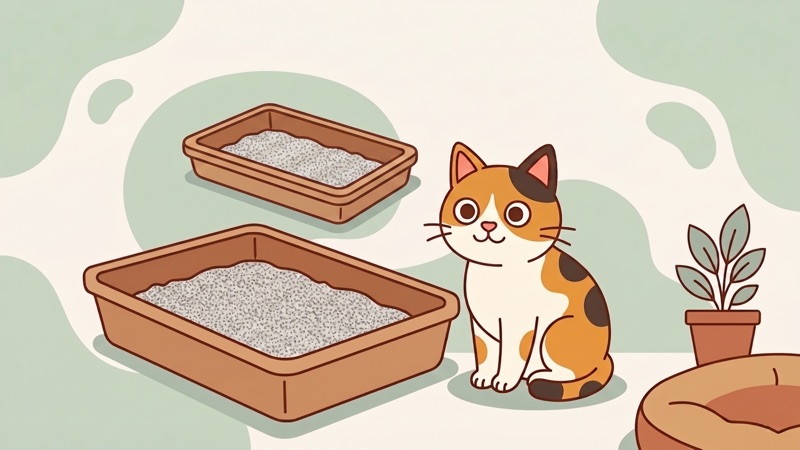
The key is that they need to be in different rooms or locations. Two boxes lined up next to each other count as one from the cat’s perspective. One upstairs, one downstairs, one in a bathroom: that’s three.
Size: bigger than you think
Ohio State’s Indoor Pet Initiative and most feline behaviorists agree: the box should be big enough that the cat can stand up fully, turn around, and not touch the sides. Most commercial covered “cat box” products are actually undersized, especially for cats over 5 kg (about 11 lbs) or mixed-breed cats with bigger frames.
A common workaround is a 70+ cm (28-inch) storage tub with one side cut down as an entry. Cheap, easy to clean, and big enough.
Should the box have a cover?
Owners tend to think a cover contains the smell. From the cat’s point of view, covers trap odor inside and limit visibility, so the cat can’t see what’s approaching while it’s vulnerable. Cornell’s recommendation is to default to open boxes. If yours are covered, try taking the lids off and see what happens.
If you have multiple cats or a dog in the house, some cats do want a bit of visual shelter. A large open box tucked into a quiet corner or behind a piece of furniture usually gives that sense of privacy without the downsides of a closed lid.
Litter: fine-grained, unscented, clumping
Cornell notes that most cats prefer fine-grained, unscented, clumping litter, filled deep enough for the cat to actually dig and cover (about two inches is a reasonable target). Scented litter smells nice to humans, but to cats, whose sense of smell is far more sensitive than ours, the perfume is often reason enough to avoid the box entirely. Pine pellets, paper, and crystal litters aren’t banned, but if your cat suddenly stops using the box, the first thing to check is whether you recently switched litter.
Switch gradually. Dumping a whole pail of new brand in one go is how a lot of cats end up peeing on the floor in protest. Keep a box of the original litter, put a second box of new litter next to it, and let the cat choose. Or mix new and old at 30/70, then 50/50, then 70/30, over a couple of weeks.
Cleanliness: scoop daily, deep-clean weekly
Scoop out urine clumps and stool at least once a day. Once a week, empty the whole box, wash it with a mild dish soap, and refill with fresh litter. Avoid bleach or strongly scented cleaners, which can push a cat away from that whole area. Most cats refuse to step into a box that already has two or three clumps in it, and owners consistently underestimate how much this matters.
The box looks fine and the cat is still avoiding it
Once medical causes are ruled out and the box itself checks out, four things explain most of the rest: the location feels unsafe, the cat’s surface preference has shifted, there is silent conflict with another cat, or something frightening happened at the box.
The location feels unsafe
A box next to the washing machine, furnace, or the hallway the dog uses, or right on the traffic path between kids’ rooms, puts the cat on edge every time it tries to use it. Cornell’s recommendation is that boxes be quiet, private, separated from feeding areas, and accessible 24 hours a day.
The “separated from food” part matters more than people realize. Cats instinctively don’t eliminate where they eat, and if you’ve got the food bowl within a few feet of the litter box, some cats will simply stop using one or the other.
Surface preference has shifted
After a bad experience with the box, some cats develop new preferences for specific surfaces, typically soft, absorbent fabrics like towels, rugs, beds, or bath mats. These targets tend to already carry the cat’s own scent, which reinforces the habit. The fix isn’t to scold the cat, it’s to make the old spot unattractive and the box more attractive at the same time.
Make the old spot unappealing: use a pet enzyme cleaner to fully eliminate the scent source, then temporarily cover the area with aluminum foil, double-sided tape, or put a bowl of water on it, so the cat doesn’t want to step there. Don’t use ammonia-based cleaners on cat urine. Ammonia smells enough like cat urine to reinforce “this is my toilet” rather than erase it (Cornell, 2024).
Make the box more attractive: put a new box right next to where the cat has been going (next to, not on top of), and make sure the new box meets the size, litter, and cleanliness standards above. Once the cat settles into using it, move it a few centimeters per day toward where you actually want it.
Silent multi-cat conflict
A multi-cat household that looks peaceful from the couch can have plenty of invisible conflict. One cat hovering in the hallway and staring at another, or camping on the path between a cat and the litter box, counts as conflict even when there’s no fighting. The cat being guarded will often just pick somewhere else to go.
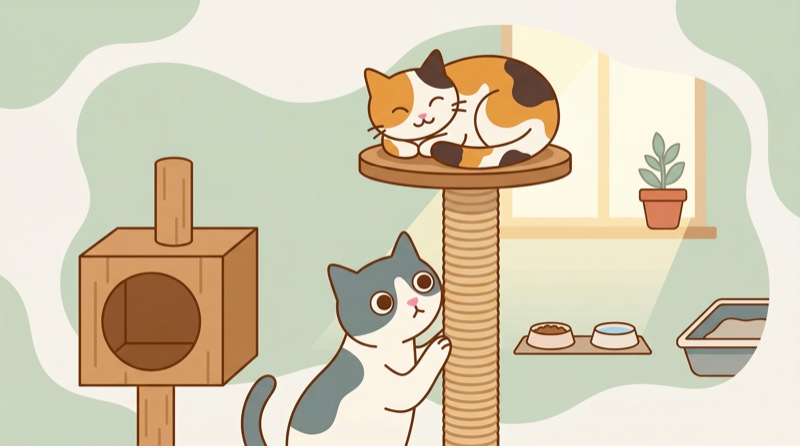
The fix is to spread boxes across different floors and rooms so the subordinate cat can reach one without crossing the dominant cat’s territory. The multi-cat household guide has more on resource placement.
A scary memory attached to the box
If a cat was startled in the box once by thunder, the vacuum, a dog, or another cat, it can link the box itself to danger. The tell is that the soiling started suddenly, the medical workup is normal, and there’s a recent noise or startle event in the household. The fix is to move that box somewhere completely different, or replace it with a box of a different shape and color, so the cat effectively re-learns what a litter box is.
Retraining when the habit is already established
If the soiling has been going on for weeks, the cat has built a “this spot is okay to pee on” memory. Retraining takes some patience, and three things have to happen in parallel: don’t punish, make the old spot unrewarding, and make the box the best option available.
Punishment doesn’t work and makes things worse
Dragging the cat over to the mess, pressing its nose into the spot, or swatting it after the fact: the veterinary behavior consensus on all of these is blunt. They don’t work, and they make soiling more frequent, not less. The reason is that cats can’t connect the punishment to the pee on the bed from an hour ago. What they learn instead is that their owner is an unpredictable threat, and they hide to pee somewhere more private. Cornell’s behavior guidance is direct: punishment is “ineffective and counterproductive.”
Concrete steps:
- Enzyme cleaner to kill the scent: regular household cleaner doesn’t break down the urine proteins that draw a cat back. A pet-specific enzyme cleaner (available at any pet store) does.
- Block the old spot: aluminum foil, double-sided tape, a plastic mat turned upside down, or a temporary food bowl placed on the spot (cats won’t eliminate where they eat).
- A/B test with two boxes: if you’re not sure what the cat prefers, put two boxes side by side, one with the current litter and one with fine-grained unscented litter, and see which gets used over a week.
- Add a new box at the soiling scene: place a fresh box exactly where the cat has been going, let it use the right receptacle there, then shift it a few centimeters a day toward the final location.
- Lower overall stress: work through the five pillars from the AAFP/ISFM environmental needs guidelines covered in the cat stress signs article, especially safe space, separated resources, and predictable human interaction.
Most cases show clear improvement within two to four weeks. If you’re past a month with no progress, or the soiling is spreading, go back to the vet. Sometimes a medical cause that didn’t show up on the first exam is surfacing. Sometimes you need a veterinary behaviorist, and in some chronic cases, a short course of anti-anxiety medication helps.
How Furwise fits in
Frequency of box visits, urine clump size, whether there’s crying, and whether anything’s ending up outside the box are exactly the details a vet asks about, and in a multi-cat home you can’t reliably keep that straight in your head. Furwise lets household members share the same cat’s health record, so someone else can fill in what you missed when you weren’t home. A week of actual data carried into the consult beats trying to describe it from memory.
The short version
When a cat pees outside the box, the answer is almost never emotional revenge. It’s usually in one of three places: the cat doesn’t feel well, the box setup isn’t working for this particular cat, or something in the environment makes toileting feel unsafe. A vet visit is always the first step, especially when the change came on suddenly. Once medical causes are cleared, walk through the box (number, size, litter, cleanliness), and then the environment and social dynamics. Most cases resolve somewhere in those three layers. The genuinely stuck cases are rare, and that’s when a veterinary behaviorist earns their fee.
Frequently Asked Questions
Is my cat peeing outside the box to get back at me? No. The veterinary behavior consensus is that cats don’t urinate for revenge; that’s projecting a human motive onto a cat. House soiling is almost always driven by a medical problem, a box setup that doesn’t suit this cat, or environmental stress. Working through those three is a much more productive question than “is she doing this on purpose.”
My older cat suddenly started peeing outside the box. What do I do? Start with the vet, because the medical odds are high in senior cats: CKD, hyperthyroidism, diabetes, and arthritis are all common. While you’re at it, check whether the box sides are too tall for the cat to step over comfortably. A low-entry box (entry height under 10 cm, about 4 inches) often solves it immediately.
Does my male cat need to be neutered to stop peeing outside the box? It depends on which problem you have. For spraying (standing, tail quivering, small amount on a vertical surface), neutering dramatically reduces the behavior, though it doesn’t eliminate it. Cornell notes that around 10% of neutered males still spray. For inappropriate elimination (squatting on a horizontal surface), neutering won’t fix it, and you should work through the medical, box, and environment paths instead. Figure out which one you’re looking at before assuming neutering is the answer.
My cat stopped using the box after I switched litter. What now? Switch back to the original litter immediately; in most cases the cat resumes using the box within a few days. Next time you want to change litter, do it gradually: 30% new and 70% old for a few days, then 50/50, then 70/30. Or run two boxes side by side, one with each, and let the cat tell you which it prefers while you adjust the ratio. If switching back doesn’t resolve it, think about what else changed during that week (a move, a new resident, a box being relocated) and work through the full troubleshooting again.
Why shouldn’t I use ammonia or bleach to clean cat urine? Ammonia is chemically similar to one of the compounds in cat urine, so it reinforces the “this is a toilet” signal rather than erasing it, which encourages the cat to come back. Bleach kills bacteria but the strong smell pushes cats away from the whole area, sometimes including nearby litter boxes. A pet-specific enzyme cleaner is the better choice because it actually breaks down the urine proteins and odor compounds.
How long does retraining usually take? Single-cause cases (for example, a new box style, or recovery from a medical issue) usually improve noticeably within two to four weeks. Cases where the habit has been established for months take longer, and sometimes need a veterinary behaviorist. The way to measure progress is to count the number of soiling incidents per week; if that number is trending down, it’s working.
References
- Ellis, S. L. H., Rodan, I., Carney, H. C., Heath, S., Rochlitz, I., Shearburn, L. D., Sundahl, E., & Westropp, J. L. (2013). AAFP and ISFM feline environmental needs guidelines. Journal of Feline Medicine and Surgery, 15(3), 219-230.
- Buffington, C. A. T. (2011). Idiopathic cystitis in domestic cats: beyond the lower urinary tract. Journal of Veterinary Internal Medicine, 25(4), 784-796.
- Cornell University College of Veterinary Medicine. (2024). Feline Behavior Problems: House Soiling. Cornell Feline Health Center
- Ohio State University Veterinary Medical Center. Indoor Pet Initiative: Litter Boxes. Indoor Pet Initiative