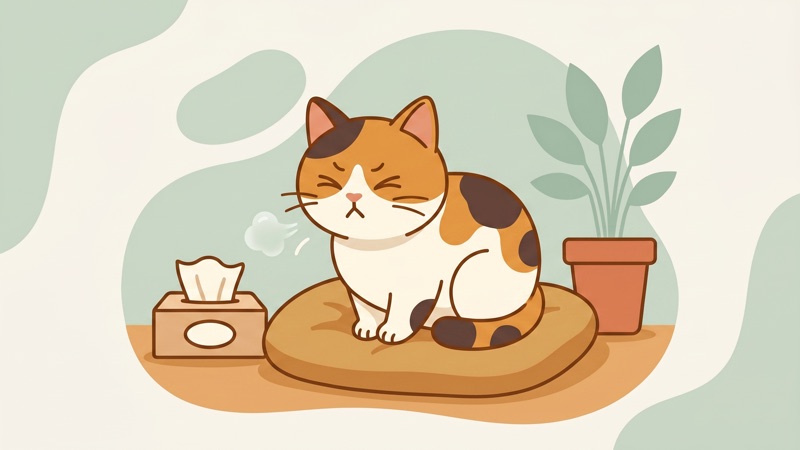
A single sneeze here and there is completely normal. Cats sneeze for the same reason we do: to clear something out of the nose. But sneezing that goes on for days, comes in fits, or arrives with a runny nose and goopy eyes usually means something more. This guide covers what causes it and how to tell a harmless tickle from a problem that needs a vet.
When a sneeze is worth a second look
A sneeze is just a reflex. The nose picks up an irritant and fires a burst of air to clear it. A bit of dust, a stray grain of litter, a whisker tickle, a puff of perfume drifting past: any of these can set one off. A cat that sneezes once or twice and then goes back to grooming and napping is a healthy cat.
What matters is the pattern. Sneezing that repeats over several days, arrives in rapid fits, or shows up next to other signs is telling you something. The other signs are the important part: a runny nose, watery or crusty eyes, less interest in food, lower energy. A sneeze on its own is rarely the story. A sneeze plus a snotty nose plus a cat that skipped breakfast is.
Cat flu: the most common cause
When sneezing won’t quit, the usual culprit is an upper respiratory infection (URI), often called “cat flu.” It is one of the most common illnesses in cats, and it spreads readily anywhere cats live close together: shelters, foster homes, catteries, multi-cat households. Plenty of cats arrive home already carrying it.
Two viruses account for the large majority of cases.
Feline herpesvirus (FHV-1)
FHV-1 is the leading viral cause of sneezing in cats. A first infection brings sneezing fits, a runny nose, conjunctivitis, and often a fever and poor appetite. The catch is what happens afterward: most cats that recover become lifelong carriers, with the virus lying dormant and flaring back up at times of stress, such as a house move, a new pet, boarding, or another illness. That is why a cat can have a sneezing episode years after the original infection, with no new cat anywhere in sight.
Feline calicivirus (FCV)
FCV causes sneezing and nasal discharge too, but its signature is mouth ulcers: painful sores on the tongue or gums that lead to drooling and a reluctance to eat. Some strains also cause a temporary limping in kittens. Like herpesvirus, infected cats can keep shedding the virus for weeks or months after they look recovered.
When bacteria get involved
Bacteria such as Chlamydia felis, Bordetella, and Mycoplasma can cause respiratory infection on their own, and conjunctivitis is usually the most obvious sign. More often, bacteria move in as a second wave on top of a viral infection. That secondary infection is often what turns thin, clear nasal discharge into something thick and yellow or green, though a heavy viral infection can sometimes do the same.
Why an indoor-only cat can still get cat flu
This surprises a lot of owners. Because herpesvirus sets up a lifelong carrier state, a cat infected as a kitten (very common in litters and shelters) carries it for good. No outside exposure is needed for a flare-up. The trigger is internal: stress lowers the immune system’s guard and the dormant virus reactivates. So an indoor-only, only-cat household is not a guarantee against cat flu. It just means new infections are unlikely. Old ones can still resurface.
Other reasons a cat sneezes
Inhaled irritants, a foreign body up the nose, dental disease, and nasal polyps or tumors also cause sneezing, and none of them is cat flu.
| Cause | What you’ll notice | Typical clue |
|---|---|---|
| Inhaled irritants | Sneezing soon after exposure, then it settles | Linked to dusty litter, smoke, aerosol sprays, perfume |
| Foreign body | Sudden, violent sneezing fits that won’t stop | Often one-sided; cat may paw at the nose or face |
| Dental disease | Chronic sneezing or persistent one-sided discharge | An infected upper tooth root can break into the nasal cavity |
| Nasal polyps or tumors | Slowly worsening, one-sided signs | More common in older cats; may include blood or facial swelling |
Inhaled irritants are the most benign on the list. Switching to a low-dust litter or being careful with sprays and smoke near your cat usually solves it. A foreign body, often a blade of grass or a seed, is more urgent: the sneezing is sudden and frantic and does not let up, and it needs a vet to locate and remove the object. Dental disease earns a place here because the roots of the upper teeth sit right below the nasal cavity, so a severe dental infection can erode through and cause chronic sneezing. And in an older cat, sneezing that slowly worsens on one side, especially with blood or a change in face shape, should be checked promptly, since nasal polyps and tumors become more likely with age.
What to watch alongside the sneezing
The discharge tells you a lot. Thin and clear discharge points to a viral infection or simple irritation. Thick, yellow, or green discharge suggests bacteria have joined in. Any blood is a reason to call a vet sooner rather than later.
The eyes are worth a close look too. Watery eyes, redness, squinting, or an eye that is partly or fully shut can mean conjunctivitis or, more seriously, a corneal ulcer from herpesvirus. Eye problems in cats can move fast, so they should not wait.
Then there is breathing and energy. A cat that is breathing hard, breathing through an open mouth, or visibly heaving its belly is in real trouble. That is an emergency, and it cannot wait until morning. The same goes for a cat that becomes withdrawn, hides, and stops doing its normal things. And watch the appetite closely, because that is the sign that matters most.
When to see a vet
Most mild cat flu can be managed at home, much the way you would ride out a head cold. But some signs mean it is time for a professional.
A cat that stops eating is an emergency
Cats decide whether to eat largely by smell, so a congested cat that cannot smell its food may simply stop. A cat that goes off food can go downhill quickly, and several days of poor intake can trigger a serious liver condition called hepatic lipidosis, especially in overweight cats. The safe move is not to wait: if your cat has not eaten in 24 hours, call a vet.
Beyond appetite, get your cat seen if you notice any of these:
- Labored or open-mouth breathing
- Thick yellow or green discharge, or any blood
- An eye that is swollen, squeezed shut, or has a visible ulcer
- Sneezing that drags on beyond 7 to 10 days, or keeps coming back
- Lethargy, hiding, or a cat that simply is not itself
- A kitten with any of the above, since kittens go downhill quickly
Home care while your cat recovers
For a mild case, supportive care is most of the job. The aim is simple: keep your cat comfortable and eating while their immune system does the real work.
Steam helps. Bring your cat into the bathroom while you run a hot shower for ten or fifteen minutes, and the humidity loosens congestion and makes breathing easier. Between those sessions, wipe any discharge from the nose and eyes with a soft cloth and warm water, since a crusted-over nose is uncomfortable and harder to breathe through.
Food is the part that matters most. A cat that cannot smell its meal often will not touch it, so warm wet food slightly to bring out the aroma and offer the strongest-smelling options you have. Keep water within easy reach too, because congestion and a mild fever both push a cat toward dehydration; the hydration guide has more on that. Give them a warm, quiet place to rest, which helps recovery and, with herpesvirus, makes a drawn-out flare less likely. And since cat flu spreads easily from cat to cat, keep a sneezing cat away from housemates while they are unwell.
Treatment: what actually helps
Most viral cat flu is self-limiting. Most uncomplicated cases run their course in about one to two weeks, though some drag on longer or flare up again, and there is no drug that cures the virus itself. Treatment is about supporting the cat while their immune system does the work.
A vet may prescribe antibiotics, but only when bacteria are involved, either as a primary cause or as a secondary infection on top of the virus. Antibiotics do nothing against the viruses themselves. For severe herpesvirus cases, particularly when the eyes are badly affected, a vet may add an antiviral such as famciclovir, along with eye medication for conjunctivitis or corneal ulcers.
One thing to skip is L-lysine. For years it was a standard recommendation for herpesvirus, and you will still see it on shelves and in articles. The current evidence does not support it. Reviews of the research have found that lysine supplements do not prevent or reduce herpesvirus disease in cats, and it is no longer a recommended treatment. Put that effort into reducing stress and keeping your cat eating instead.
Reducing the risk
You cannot make a cat sneeze-proof, but you can lower both the odds and the severity.
The core FVRCP vaccine covers both herpesvirus and calicivirus. It does not completely block infection or erase the carrier state, but it makes illness milder and less frequent, which is a real benefit and the main reason it is a core vaccine.
Beyond vaccination, keep everyday stress low, since stress is the main trigger for herpesvirus flares. Use a low-dust litter to spare the airways. When a new cat joins the household, keep them separate for a couple of weeks before introductions so any brewing infection has a chance to show itself. And during an outbreak, wash shared bowls and bedding often, since the viruses spread on objects as well as through direct contact.
How Furwise Can Help
A sneezing episode is much easier to handle when you can see the timeline. Furwise lets you log symptoms, photograph nasal and eye discharge, and note appetite and energy day to day. When you do head to the vet, you can answer the questions that actually matter, how long, how often, and getting better or worse, without digging through memory or camera roll.
An occasional sneeze is just a cat being a cat. Frequent sneezing, especially alongside a runny nose, eye discharge, or a dip in appetite, usually points to cat flu, and most cases clear up with rest, steam, and a little patience. The line that matters most is appetite: a cat that keeps eating is usually one you can nurse at home, while a cat that stops needs a vet promptly. When you are unsure, the color of the discharge and your cat’s energy level are your best guides.
Frequently Asked Questions
Why does my cat keep sneezing? Repeated sneezing over several days is most often a sign of an upper respiratory infection, or “cat flu,” usually caused by feline herpesvirus or calicivirus. Other causes include inhaled irritants, a foreign object lodged in the nose, dental disease, and, in older cats, nasal polyps or tumors. If the sneezing comes with a runny nose, eye discharge, or appetite loss, have a vet take a look.
Is cat sneezing contagious to humans? No. The viruses behind cat flu, feline herpesvirus and feline calicivirus, are specific to cats and do not infect people. They are, however, very contagious between cats, so a sneezing cat should be kept apart from other cats in the home. Washing your hands after handling a sick cat is still a sensible habit.
Can I give my cat human cold medicine? No. Never give human cold or flu medication to a cat. Common ingredients such as acetaminophen (paracetamol) and decongestants are toxic to cats and can be dangerous even in small doses. Stick to vet-guided care for anything beyond basic home support.
Can allergies make a cat sneeze? Not as often as people assume. Unlike people, cats with allergies usually show it through itchy skin rather than sneezing. Repeated sneezing is far more likely to come from an infection or a physical irritant such as dusty litter or aerosol sprays.
When should I take my sneezing cat to the vet? See a vet if your cat stops eating, breathes with effort or an open mouth, has thick yellow or green or bloody discharge, has a swollen or shut eye, or keeps sneezing beyond a week to ten days. Kittens and any cat that seems lethargic or unwell should be seen sooner rather than later.
Does L-lysine help cats with herpesvirus? Current evidence does not support it. Although L-lysine was recommended for years and is still widely sold, research reviews have found it does not prevent or reduce herpesvirus disease in cats. Reducing stress and keeping your cat eating well are more useful.
References
- Cornell Feline Health Center. (2024). Feline Upper Respiratory Infection. Cornell University
- Thiry, E., et al. (2009). Feline Herpesvirus Infection: ABCD Guidelines on Prevention and Management. Journal of Feline Medicine and Surgery, 11(7), 547-555. DOI
- Radford, A. D., et al. (2009). Feline Calicivirus Infection: ABCD Guidelines on Prevention and Management. Journal of Feline Medicine and Surgery, 11(7), 556-564. DOI
- Bol, S., & Bunnik, E. M. (2015). Lysine supplementation is not effective for the prevention or treatment of feline herpesvirus 1 infection in cats: a systematic review. BMC Veterinary Research, 11, 284. DOI