
Vaccines are one of the most effective ways to protect your cat from serious, often fatal diseases. But with different types of vaccines and varying schedules, it can get confusing. This guide breaks down what you actually need to know.
Why Vaccines Matter
Cats can contract several serious viral and bacterial infections, some of which have no cure. Vaccines work by training your cat’s immune system to recognize and fight these pathogens before they cause illness.
Without vaccination:
- Feline Panleukopenia has a mortality rate of up to 90% in kittens
- Rabies is 100% fatal once symptoms appear, and can spread to humans
- Feline Leukemia compromises the immune system and often leads to cancer
The good news: core vaccines are highly effective at preventing these diseases.
Core vs. Non-Core Vaccines
Veterinary guidelines divide cat vaccines into two categories:
Core vaccines are recommended for all cats, regardless of lifestyle:
- FVRCP (Feline Viral Rhinotracheitis, Calicivirus, Panleukopenia)
- Rabies
- FeLV (Feline Leukemia Virus), core for kittens under 1 year
Non-core vaccines depend on your cat’s risk factors:
- FeLV for adult cats (if outdoor access or multi-cat household)
- Chlamydia felis
- Bordetella bronchiseptica
- FIV (Feline Immunodeficiency Virus)
What about FIP vaccines?
Vaccines for Feline Infectious Peritonitis (FIP) exist but are currently not recommended by AAHA/AAFP or WSAVA guidelines due to limited effectiveness.
Understanding Each Vaccine
FVRCP (The “3-in-1” Vaccine)
This combination vaccine protects against three diseases:
| Disease | What It Does | Why It Matters |
|---|---|---|
| Feline Panleukopenia (FPV) | Attacks rapidly dividing cells | Highly contagious, often fatal in kittens |
| Feline Herpesvirus (FHV-1) | Causes upper respiratory infection | Lifelong carrier status, stress triggers flare-ups |
| Feline Calicivirus (FCV) | Causes respiratory and oral disease | Multiple strains exist, can cause chronic issues |
Rabies
Rabies is a fatal viral disease that affects the nervous system. It’s transmissible to humans, which is why many regions legally require rabies vaccination for cats.
Feline Leukemia Virus (FeLV)
FeLV weakens the immune system and can cause cancer. It spreads through close contact: mutual grooming, shared food bowls, or bite wounds. Kittens are more susceptible than adults, which is why FeLV is considered core for cats under one year old.
Kitten Vaccination Schedule
Kittens receive maternal antibodies from their mother’s milk, but this protection fades over time. The tricky part: we don’t know exactly when. That’s why kittens need multiple doses.
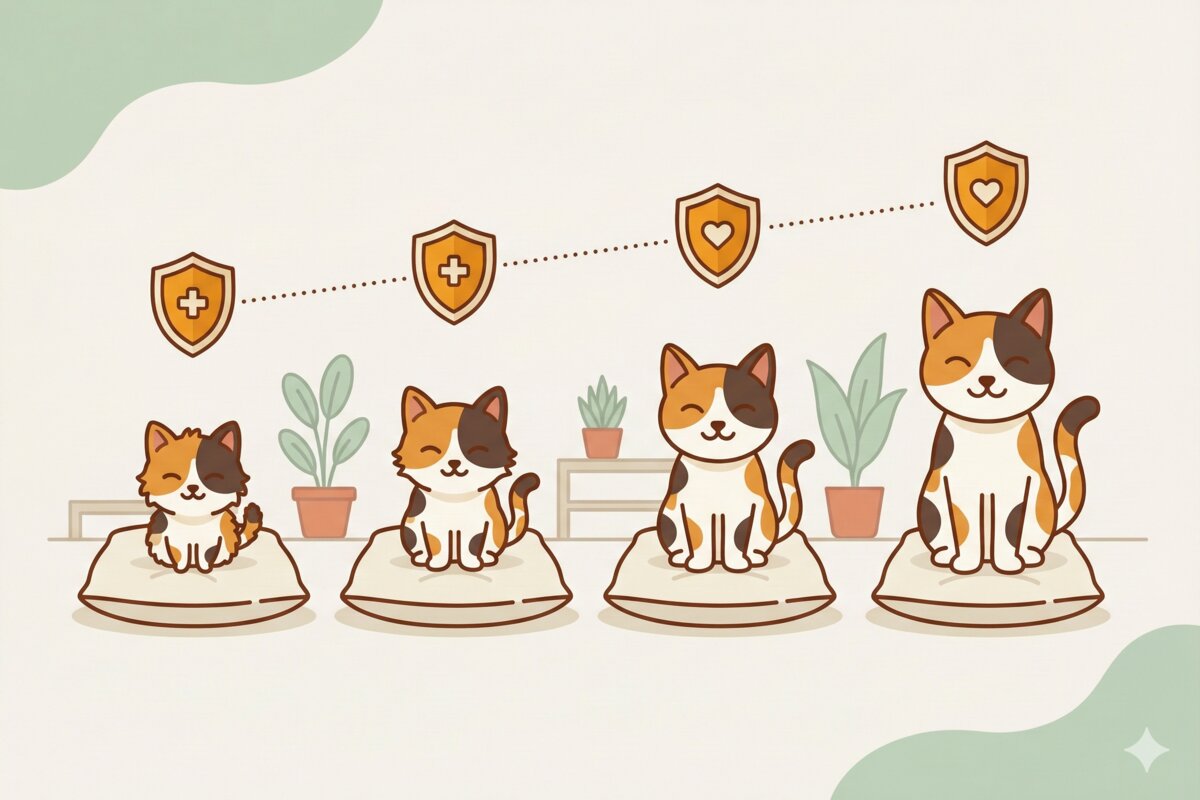
Kitten vaccination milestones from 6 weeks to 6 months
| Age | Vaccines |
|---|---|
| 6-8 weeks | FVRCP #1, FeLV #1 |
| 10-12 weeks | FVRCP #2, FeLV #2 |
| 14-16 weeks | FVRCP #3, Rabies |
| 6 months | FVRCP booster (recommended by WSAVA) |
The final FVRCP dose must be given at 16 weeks or later to ensure the kitten’s immune system responds properly.
Adult Cat Booster Schedule
After the initial kitten series, adult cats need periodic boosters:
| Vaccine | Booster Frequency |
|---|---|
| FVRCP | Every 3 years |
| Rabies | Every 1-3 years (check local laws) |
| FeLV | Every 2-3 years (if at-risk) |
Indoor-only cats with no exposure to other cats may not need FeLV boosters after their first year.
Adjuvanted vs. Non-Adjuvanted Vaccines
Adjuvants are additives that boost the immune response. However, in rare cases, adjuvanted vaccines have been linked to Feline Injection-Site Sarcoma (FISS), a type of cancer that can develop at vaccination sites.
Non-adjuvanted vaccines reduce this risk and are now recommended, especially for:
- FeLV vaccines
- Rabies vaccines
Ask your vet about non-adjuvanted options. They may cost slightly more but offer better safety profiles.
Post-Vaccination Care
After vaccination, keep an eye on your cat for 24-48 hours. Mild side effects are normal:
- Slight lethargy
- Reduced appetite
- Mild fever
- Small swelling at injection site
Contact your vet if you notice:
- Vomiting or diarrhea
- Facial swelling or difficulty breathing (allergic reaction)
- Swelling at the injection site that persists beyond 3 weeks or grows larger than 2cm
How FurWise Can Help
Keeping track of vaccination schedules can be tricky, especially with multiple cats or varying booster intervals. FurWise is working on vaccine reminder features to help you:
- Track vaccination history for each of your cats
- Get timely reminders before boosters are due
- Store vet records in one place
Stay tuned for updates as we roll out these features.
Key Takeaways
- Core vaccines (FVRCP, Rabies, FeLV for kittens) are essential for all cats
- Kittens need multiple doses because maternal antibodies interfere with early vaccines
- Adult boosters vary: FVRCP every 3 years, Rabies per local law, FeLV based on risk
- Choose non-adjuvanted vaccines when available to reduce FISS risk
- Watch for reactions in the 48 hours after vaccination
Talk to your vet about the best vaccination plan for your cat’s specific situation.
References
- Stone, A. E., et al. (2020). 2020 AAHA/AAFP Feline Vaccination Guidelines. Journal of Feline Medicine and Surgery, 22(9), 813-830. DOI
- WSAVA Vaccination Guidelines Group. (2024). Guidelines for the Vaccination of Dogs and Cats. WSAVA
- American Association of Feline Practitioners. (2020). AAHA/AAFP Feline Vaccination Guidelines. catvets.com
- Cornell Feline Health Center. (2023). Feline Vaccines: Benefits and Risks. Cornell University