It’s not the most glamorous topic, but your cat’s poop is actually one of the best windows into their health. Changes in shape, color, or consistency often show up before other symptoms do. A quick glance at the litter box each day can catch problems early.
The Bristol Stool Scale
The Bristol Stool Scale is a medical chart originally developed for humans in 1997, but it works just as well for cats. It classifies stool into 7 types based on shape and consistency, making it easy to track changes over time.
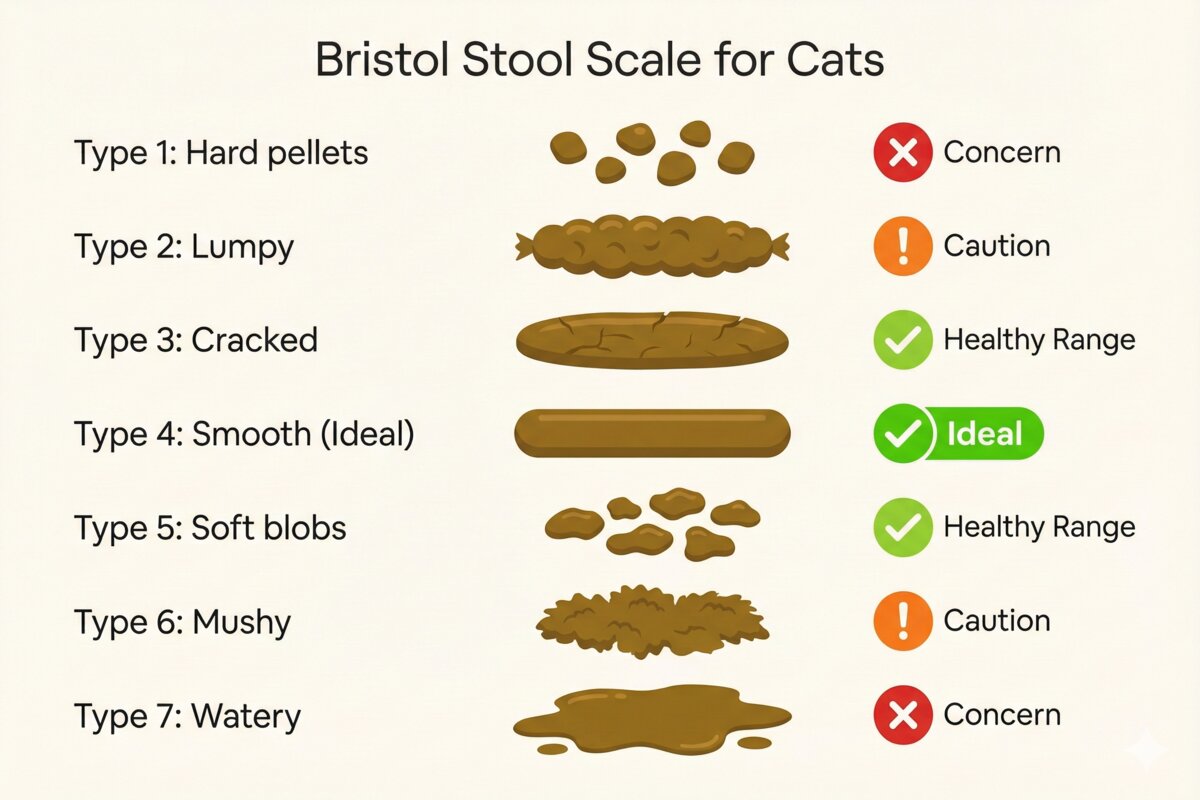
The Bristol Stool Scale adapted for cats
| Score | Shape | What It Means |
|---|---|---|
| 1 | Hard pellets, like small stones | Severe constipation. Needs more water and fiber. |
| 2 | Lumpy sausage shape | Mild constipation. |
| 3 | Sausage with cracks | Normal range, slightly firm. |
| 4 | Smooth sausage or snake | Ideal. This is what healthy cat poop looks like. |
| 5 | Soft blobs with clear edges | Normal range, slightly soft. May need more fiber. |
| 6 | Mushy, fluffy pieces | Mild diarrhea. Monitor closely. |
| 7 | Watery, no solid form | Diarrhea. Needs attention. |
The healthy range is 3-5, with 4 being ideal. Most healthy cats will consistently produce type 3 or 4 stools.
What Color Tells You
Color matters just as much as shape. While brown is normal, other colors can signal specific issues.
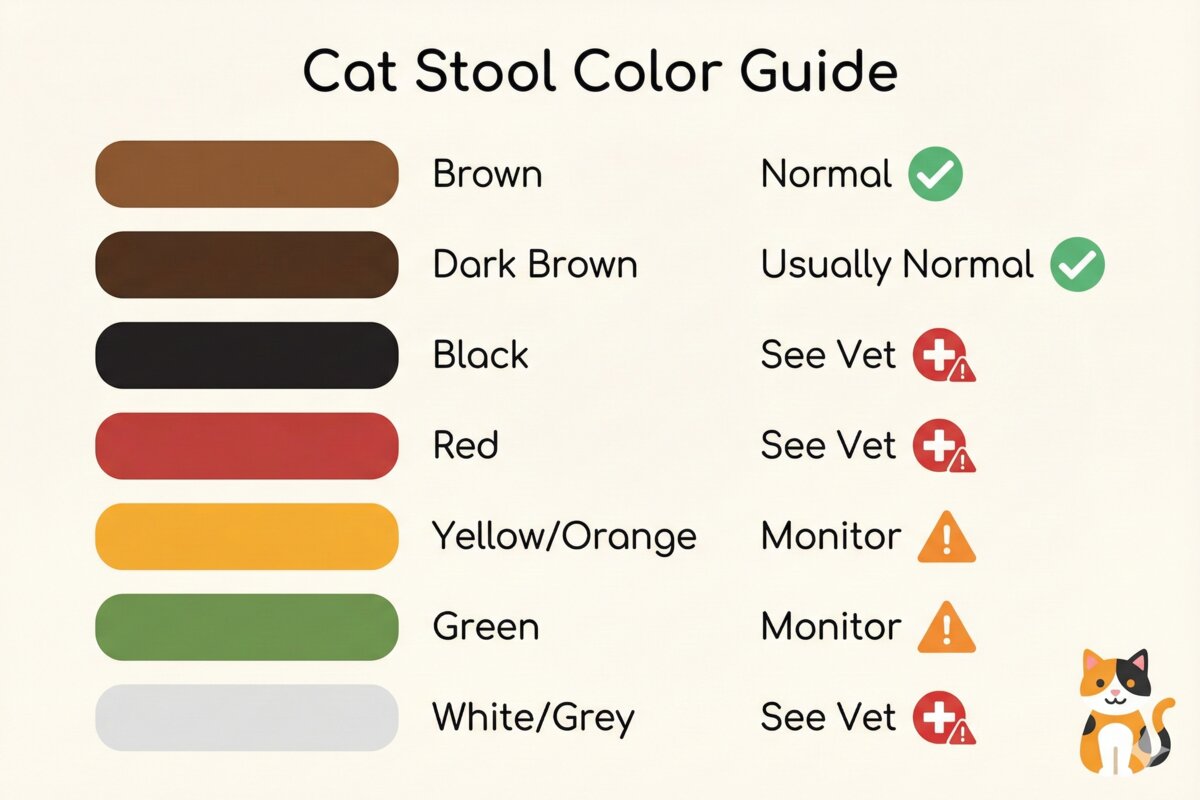
What different stool colors may indicate
| Color | Status | Possible Causes |
|---|---|---|
| Brown | Normal | Healthy digestion |
| Dark brown | Usually normal | High-protein diet |
| Black | See vet | Upper GI bleeding, iron supplements |
| Red / bloody | See vet | Lower GI bleeding, anal issues |
| Yellow / orange | Monitor | Liver/gallbladder issues, food intolerance |
| Green | Monitor | Bile issues, eating grass, fast transit |
| White / grey | See vet | Bile duct blockage, pancreatic issues |
| Mucus coating | Monitor | Intestinal inflammation, parasites |
Other Things to Watch For
Beyond shape and color, keep an eye out for:
Foreign objects: Hair, string, or undigested food. Occasional hairballs are normal, but frequent ones might mean overgrooming from stress or skin issues.
Parasites: Small white segments (tapeworm) or thin worms. If you see anything moving, bag a sample and see your vet.
Frequency changes: Cats typically poop 1-2 times daily. Going more often, straining, or avoiding the litter box can all indicate problems.
When to See a Vet
Schedule a vet visit if you notice:
- Bristol score of 1-2 (constipation) or 6-7 (diarrhea) lasting more than 24 hours
- Black, red, or grey stool
- Blood or mucus
- Straining or crying in the litter box
- No bowel movement for more than 48 hours
- Diarrhea combined with vomiting, lethargy, or loss of appetite
Quick tip
When visiting the vet for digestive issues, bring a fresh stool sample in a sealed bag. This saves time and often avoids the stress of collecting a sample at the clinic.
How FurWise Can Help
Tracking your cat’s stool health manually can be tedious. FurWise makes it easier with photo-based analysis.
Take a photo, and the app will:
- Estimate Bristol score based on shape and consistency
- Analyze color and flag potential concerns
- Track changes over time so you can spot patterns
- Suggest when to see a vet based on what it finds
It’s not a replacement for veterinary care, but it helps you catch issues early and gives you useful data to share with your vet.
The Bottom Line
Your cat’s poop is a daily health check hiding in plain sight. A quick glance can tell you a lot, and catching changes early often means simpler, cheaper treatment. Aim for Bristol 3-4, brown color, and consistent frequency. Anything outside that range for more than a day or two is worth investigating.
References
- Lewis SJ, Heaton KW. (1997). Stool form scale as a useful guide to intestinal transit time. Scandinavian Journal of Gastroenterology, 32(9), 920-4. PubMed
- Mars Petcare. (2023). Poopscan: The Science Behind Pet Stool Analysis. mars.com
- Cornell Feline Health Center. (2024). Gastrointestinal Parasites of Cats. Cornell University.
- International Cat Care. (2023). Digestive System Problems in Cats. icatcare.org