Cats are masters at hiding pain. In the wild, showing weakness could attract predators, so cats evolved to mask discomfort. This makes it challenging for cat owners, because by the time a cat obviously shows they’re unwell, the problem may already be serious. The good news is that veterinary science has developed tools to help us detect pain earlier.
Why Do Cats Hide Pain?
Cats’ ancestors were solitary predators that were also prey for larger animals. In that environment, showing weakness meant exposing yourself as an easy target. Even though domestic cats now live safely, this instinct remains.
This means cats won’t howl or whine like dogs do when in pain. Mild to moderate pain often shows no obvious behavioral changes. By the time a cat is obviously hiding, not eating or drinking, the situation may already need urgent attention. That’s why learning to spot subtle signs of pain is so important.
The Feline Grimace Scale
In 2019, researchers at the University of Montreal published the Feline Grimace Scale (FGS), a scientifically validated tool for assessing pain in cats. Even people without professional training can accurately determine whether a cat is in pain using this scale.
Use the interactive tool below to assess your cat. Score each of the 5 facial features from 0-2 based on what you observe:
Pain Assessment Tool
Select a score for each feature based on your cat's current expression
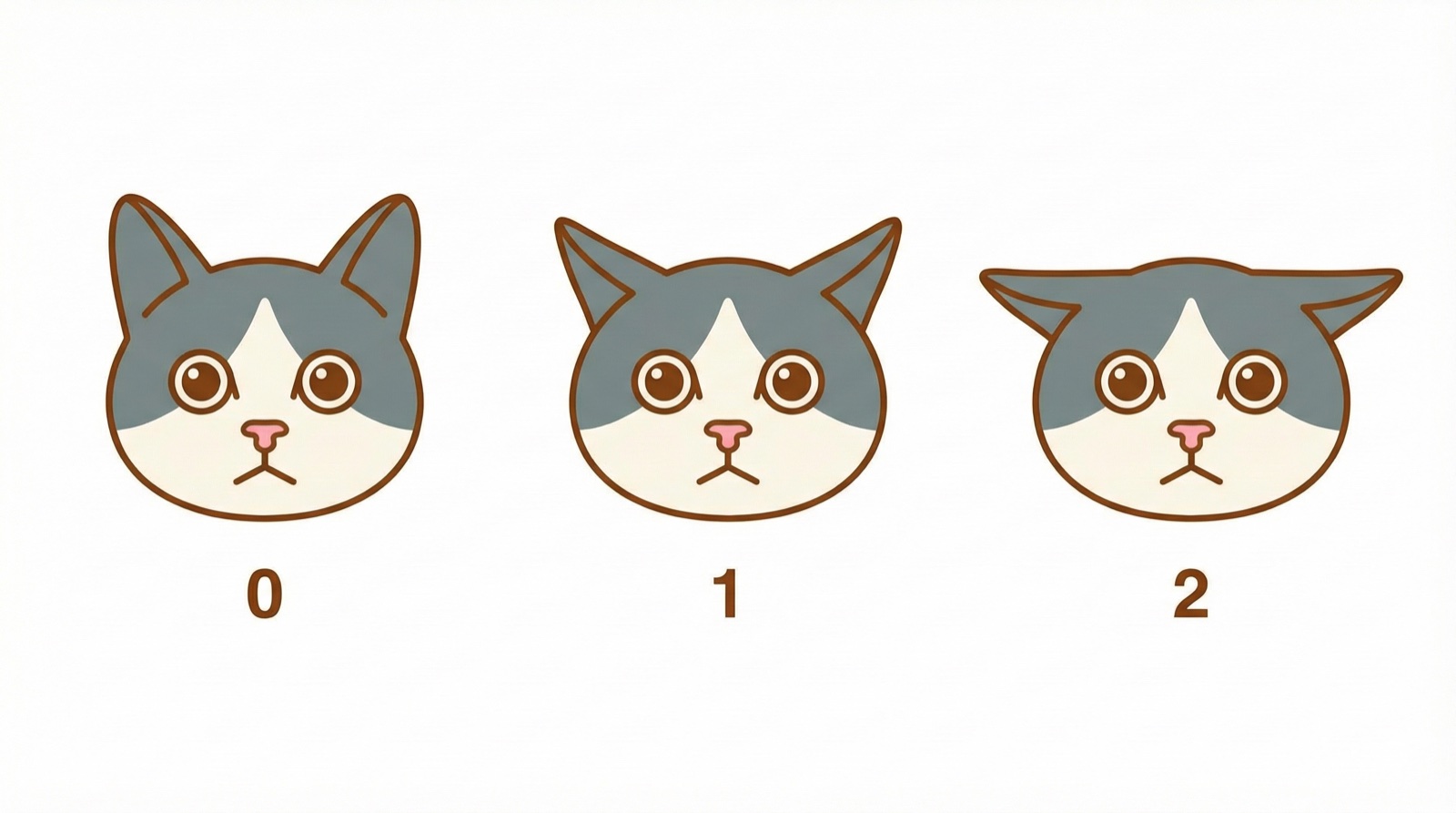
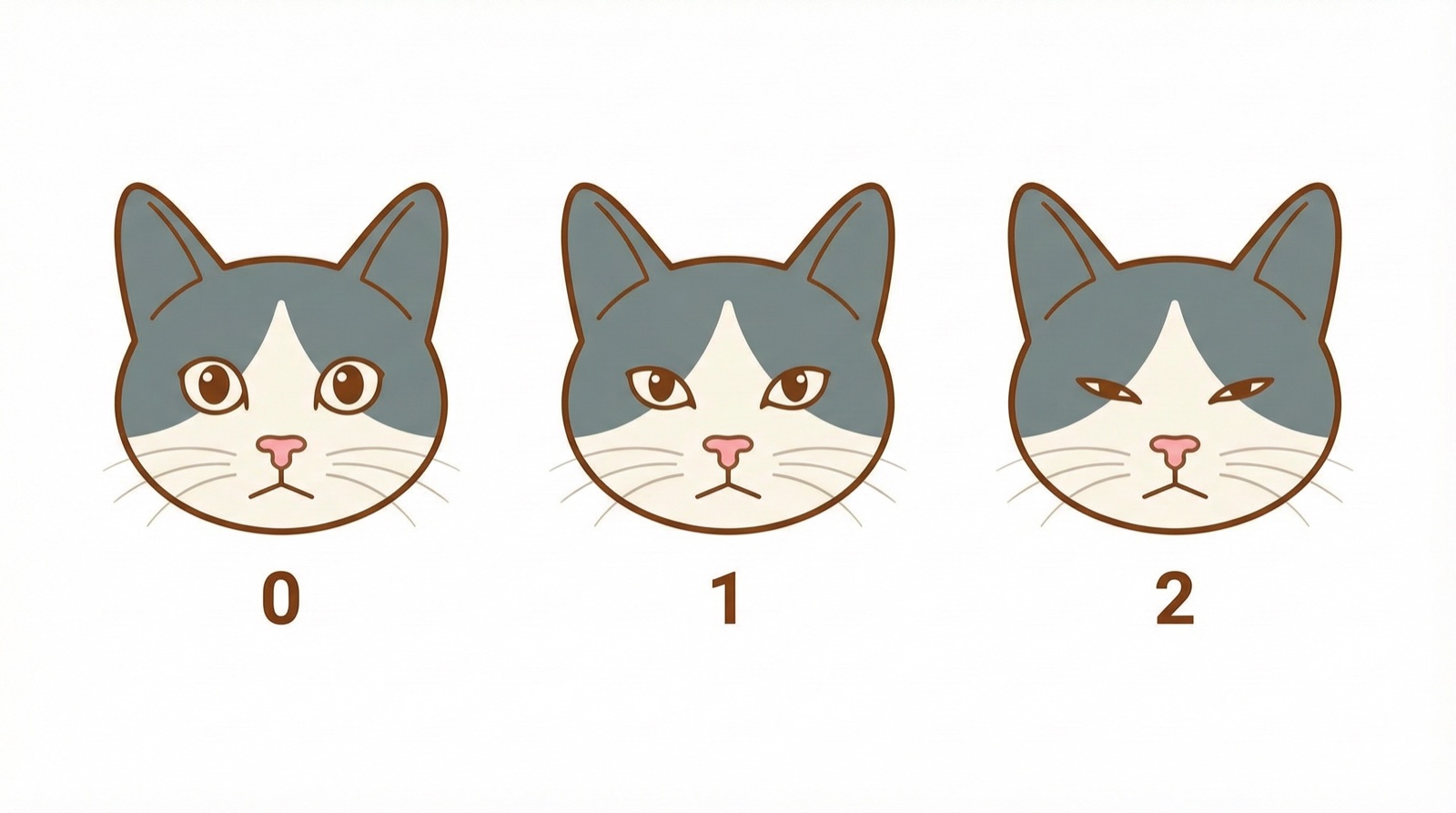
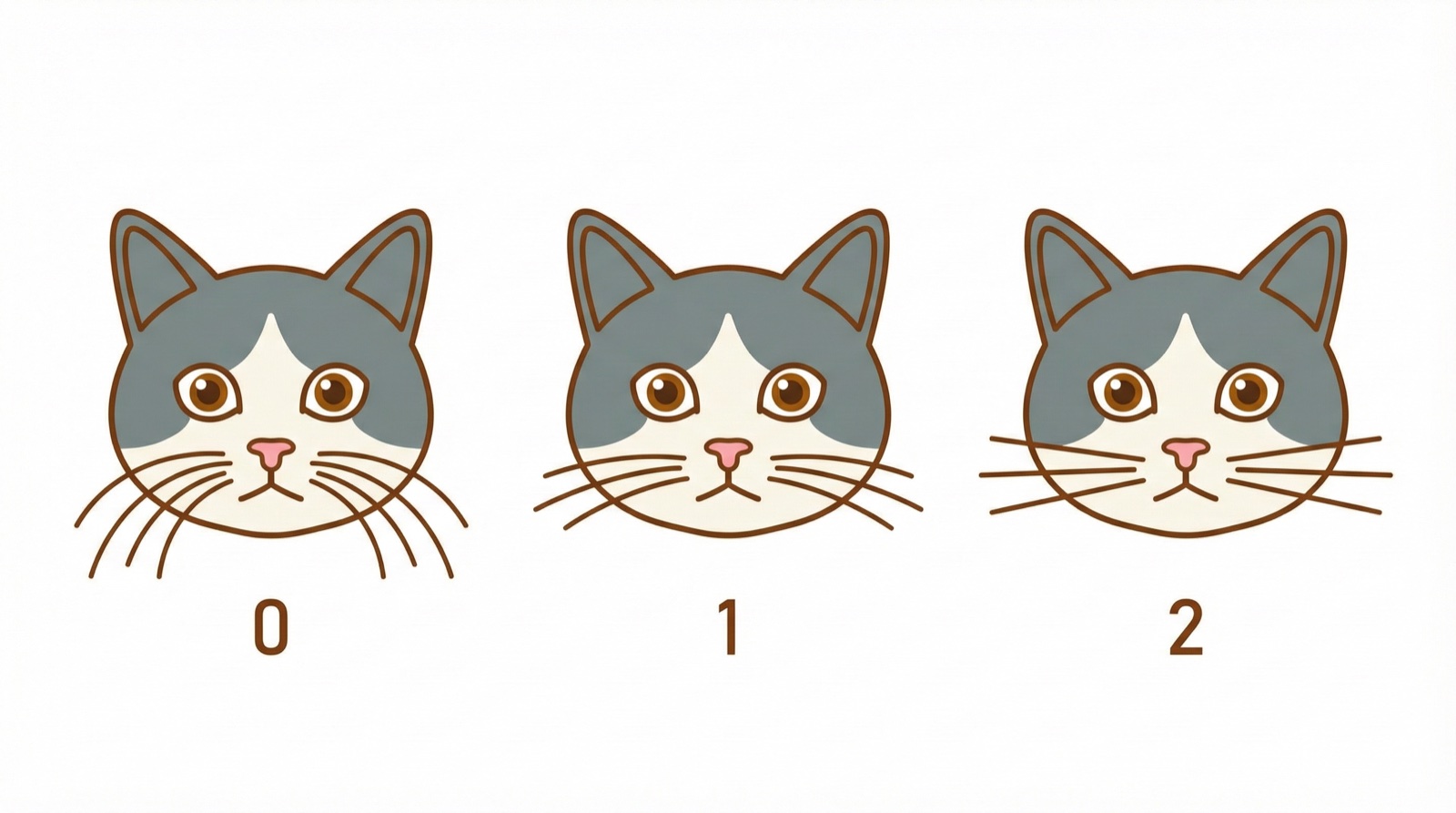
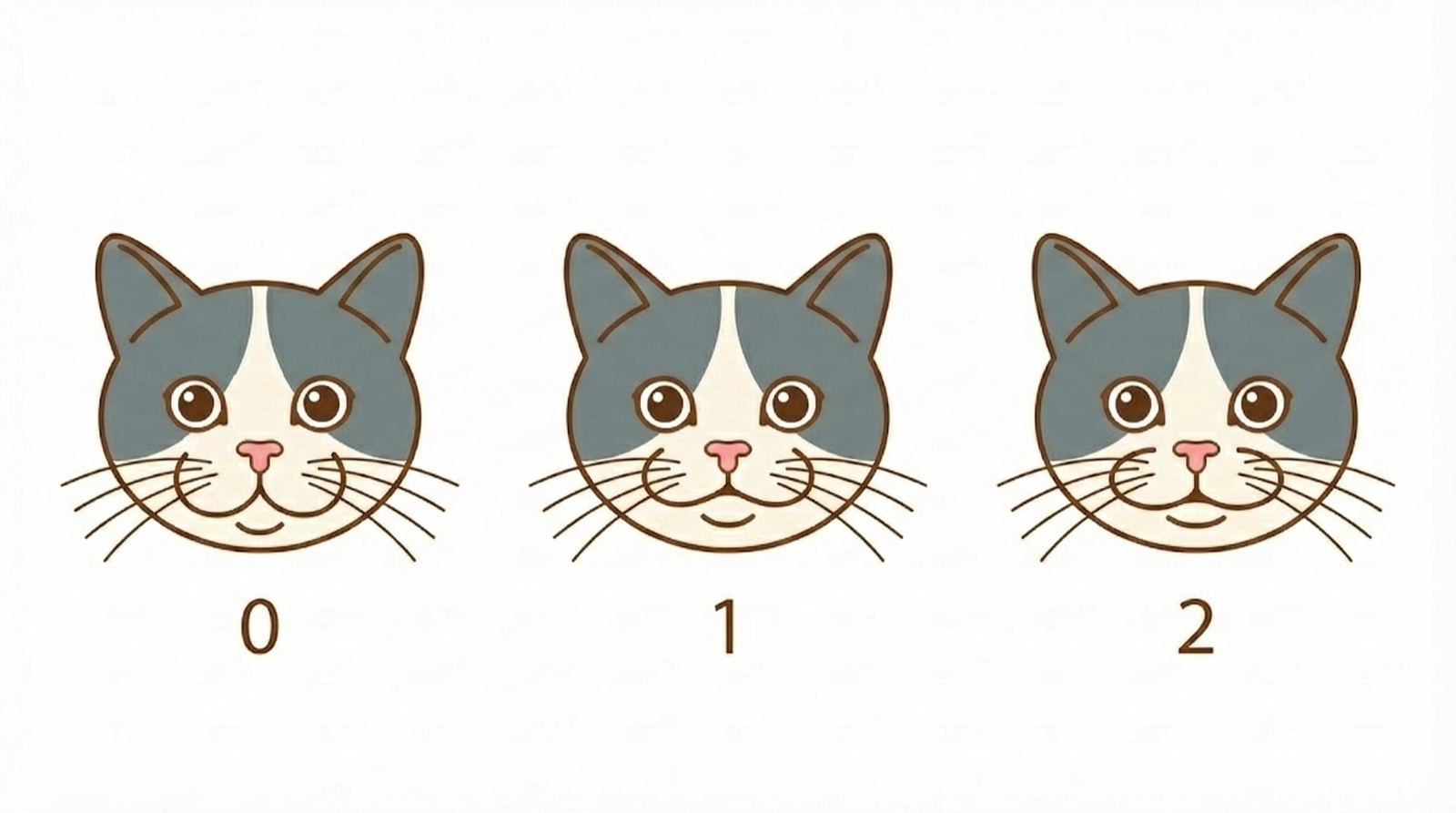
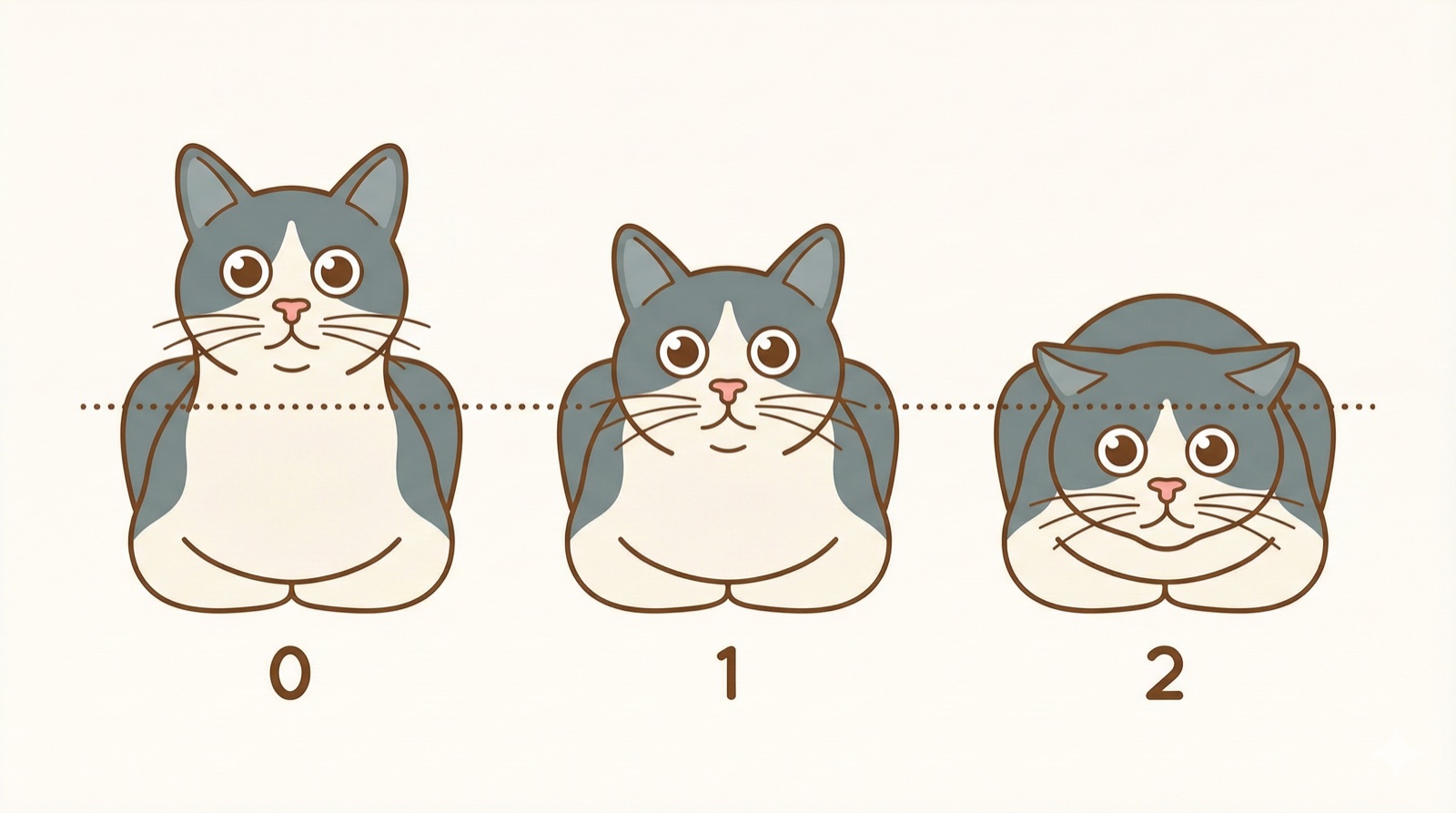
How to Interpret Scores
Total scores range from 0-10. A score of 4 or above suggests the cat may be experiencing pain and should be evaluated by a veterinarian.
How to Assess Correctly
When to Observe: Choose a time when your cat is resting quietly. Avoid assessing right after waking, eating, or during play.
Key Points: Look at the overall picture, not just single features. Know your cat’s normal “baseline” expression.
Common Mistakes: Don’t mistake sleepy eyes for pain squinting. Observe at multiple times before concluding.
Other Pain Signs
Besides facial expression, these behavioral changes may also indicate pain:
Activity changes: Fewer jumps, hesitation when jumping, altered gait or limping, lying down more than usual.
Routine changes: Decreased appetite, changes in grooming habits, altered bathroom behavior.
Behavior changes: Hiding more often, reduced interest in interaction, increased aggression when touched.
When to See a Vet
See a vet if:
- Feline Grimace Scale score is 4 or above
- Pain signs persist more than 24 hours
- Other symptoms appear like not eating, not drinking, vomiting, or diarrhea
- Your cat is limping or refusing to move
- Strong reaction when touching a specific area
References
- Evangelista, M. C., et al. (2019). Facial expressions of pain in cats: the development and validation of a Feline Grimace Scale. Scientific Reports, 9, 19128. DOI
- Merola, I., & Mills, D. S. (2016). Behavioural signs of pain in cats: An expert consensus. PLoS ONE, 11(2), e0150040.
- Feline Grimace Scale. (2023). felinegrimacescale.com
- International Association of Feline Practitioners. (2022). AAFP Pain Management Guidelines.